

Phil Castle, The Business Times
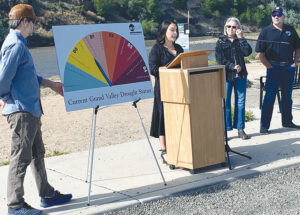
An average snowpack and what are forecast as average runoffs are expected to equate to sufficient water in Mesa County this summer despite dry conditions overall.
That also means no mandatory restrictions are planned, although water conservation measures are encouraged.
“We’re having an average year,” said Randi Kim, utilities director with the City of Grand Junction.
Kim joined with representatives of the Clifton Water District, Ute Water Conservancy District and Colorado State University Tri River Area Extension at a news conference to detail the outlook for water availability and drought.
Those entities are among the members of the Drought Response Information Project that meet to review drought conditions and water supply as well as promote water conservation.
Kim said snow surveys conducted atop the Grand Mesa where the City of Grand Junction obtains its water are at about
89 percent of the 35-year average. Reservoirs on the Grand Mesa are full, she said.
Dust on snow could contribute to early runoff, but cooler temperatures have countered that, she said.
Michael Simpson, a supervisor with the Clifton Water District, said flows on the Colorado River from which the district obtains water, are average for this time of year.
Andrea Lopez, external affairs manager with the Ute Water Conservancy District, also said snow surveys, reservoir levels and soil moisture content all point to an average water year and sufficient supplies.
The Ute Water Conservancy District is the largest domestic water provider in the Grand Valley in serving 90,000 customers, Lopez said.
Jeff Piper, an agent with the Colorado State University Tri River Area Extension, said the outlook remains favorable for sufficient water as well as large crops of peaches and cherries.
Overall conditions remain dry, however. As of April 25, the drought status in Mesa County ranged from abnormally dry to moderate drought. Lopez said conditions could worsen this summer.
Kim said the City of Grand Junction promotes such conservation efforts as replacing turf, installing more efficient appliances and using greywater systems.
For more information about the Drought Response Information Project, including water conservation measures, visit https://dripinfo.com.

Average year bodes well for water supplies added by Phil Castle on
View all posts by Phil Castle →