
Phil Castle, The Business Times
In astronomical terms, summer officially started in the Northern Hemisphere with the solstice on June 21. But the summer tourism season started in the Grand Valley well before that. Before the Memorial Day holiday weekend in May even.
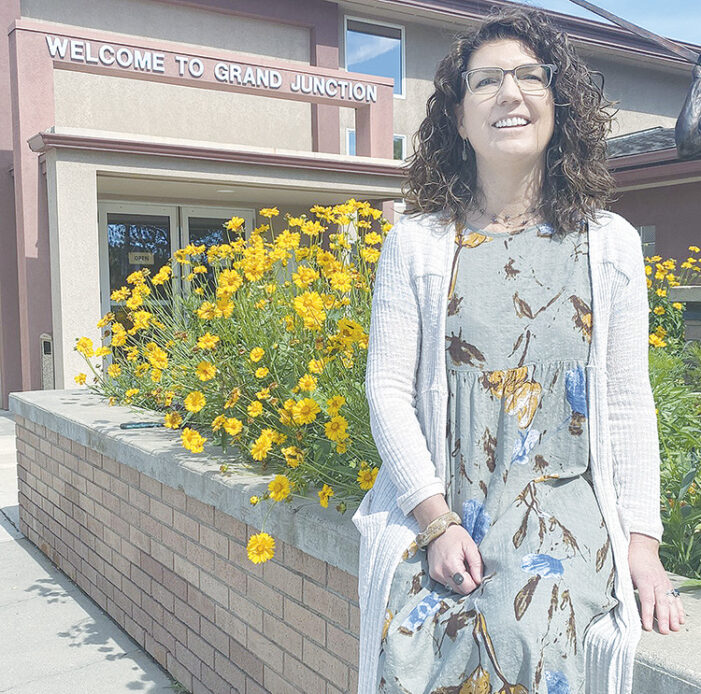
Elizabeth Fogarty, director of Visit Grand Junction and the city’s destination marketing efforts, says the season stretches from March through September — from the advent of warmer weather in spring through the changing foliage in fall.
It’s the busiest time of year for leisure travel to the Grand Valley, Fogarty says. As well as the hotels, motels, restaurants, gas stations and retailers who serve travelers and, by extension, bolster the local economy.
That makes the outlook for summer tourism all the more important. But Fogarty has great expectations for this year. Her two-word forecast: “Definitely positive.”
Fogarty says she bases her outlook on a myriad of factors, among them lower gasoline prices and lower costs to get to what’s primarily a driving destination, easing inflation more broadly and pent-up demand for travel that’s persisted in the aftermath of the COVID-19 pandemic.
That’s not to mention all the media coverage the Grand Valley has received this year, including inclusion in a prestigious list of global destinations published in the New York Times.
But the main attractions remain the main attractions, Fogarty says, including the scenic beauty and outdoor recreation as well as arts, culture and history.
That also includes what Fogarty dubs nature’s trifecta in the Colorado National Monument, Grand Mesa and one of the highest concentrations of rock arches on the planet. It’s a unique value proposition, she says. “No one else can tell that story in the world.”
A number of indicators offer encouragement, Fogarty says. For the week of June 4 to 10, 77.2 percent of hotel and motel rooms in Grand Junction were occupied. That’s a higher proportion than the average for either Colorado or the United States.
Gasoline prices dropped from a peak above $5 a gallon a year ago to what AAA recently reported as an average of about $3.57 a gallon nationwide and $3.55 statewide.
The difference equates to nearly $30 for a 20-gallon tank.
The results of surveys reflect increasing intentions to travel, Fogarty says. In summer, that means family travel. Among households with more than $100,000 in annual income, 81 percent reported plans to take vacations. Even among households earning less than $50,000 a year, 54 percent expected to take vacations.
In its latest biannual forecast, the U.S. Travel Association predicted domestic leisure travel will remain strong, although moderate from the surge that occurred last year. Travel is expected to grow 2 percent in 2023 and 2023.
Fogarty says pent-up demand for travel hasn’t yet eased following the COVID-19 pandemic and related restrictions in 2020 and 2021. “People still feel deprived from what happened those couple of years.”
At the same time, there’s been an increase in solo tourism. Those traveling alone look for safe destinations, Fogarty says. Survey results confirm two perceptions about the Grand Valley — that it’s friendly and safe.
Media coverage also has attracted attention — and travel — to the Grand Valley. Earlier this year, Grand Junction was included among 52 places to go in 2023 in the latest list published in the Sunday travel section of the New York Times. Grand Junction was the 45th destination — between Madrid in Spain and La Guajira in Columbia. Grand Junction was among a dozen U.S. destinations that made the list.
Grand Junction was hailed for its landscapes and outdoor recreation as well as something missing from other destinations — crowds.
The list mentioned hiking in the Colorado National Monument and mountain biking on local trails as well as visiting restaurants, shops and wineries.
Grand Junction has received additional media attention for making the list, Fogarty says, further increasing the promotional value.
Grand Junction garnered additional attention in Outside magazine as a base from which to explore the Colorado Plateau and what the magazine described as “America’s greatest natural playground.”
Travel + Leisure recently featured the nearby Rattlesnake Canyon and its concentration of sandstone arches.
The combination of the Colorado National Monument, Grand Mesa and arches in such close proximity constitutes a unique draw, Fogarty says.
The Colorado National Monument and downtown shopping district continue to rank among the most popular attractions, she says.
But other pillars also support tourism, including arts, culture, history and wineries. “Now we have many pillars.”
Using the proceeds from lodging taxes assessed on hotel and motel stays, Visit Grand Junction promotes travel and tourism in a variety of ways — not only in pitching newspaper and magazine stories, but also advertising on television and social media.
Data science plays a significant role in targeting the right messages to potential visitors in appropriate ways and at the appropriate times, Fogarty says.
Visit Grand Junction will soon publish a rebranded visitor guide as well as launch a revamped website this fall, she says.
The efforts are important, she says, because of the contributions of travel and tourism to the local economy.
Visitor spending accounts for about 30 percent of city sales tax collections, she says. Restaurants attribute 40 percent to 70 percent of business to visitors.
A study released last year by Nathan Perry, an economics professor at Colorado Mesa University in Grand Junction, pegged the direct, indirect and induced effects of outdoor recreation businesses and outdoor recreation tourism in Mesa County at a total of $484 million a year.
Fogarty says travel, tourism and outdoor recreation are collectively big employers. That includes entry level jobs for students and others. She says the leisure and hospitality industry sometimes gets a bad rap for low wages, but the sector offers opportunities and upward mobility for those who pursue careers.
Fogarty says her “definitely positive” forecast for the summer season extends beyond travel and tourism businesses to the Grand Valley economy and those who live here.

Sunny forecast: Tourism director expects busy season added by Phil Castle on
View all posts by Phil Castle →