
Rising shortfall may increase funds requested from local governments
Brandon Leuallen, The Business Times
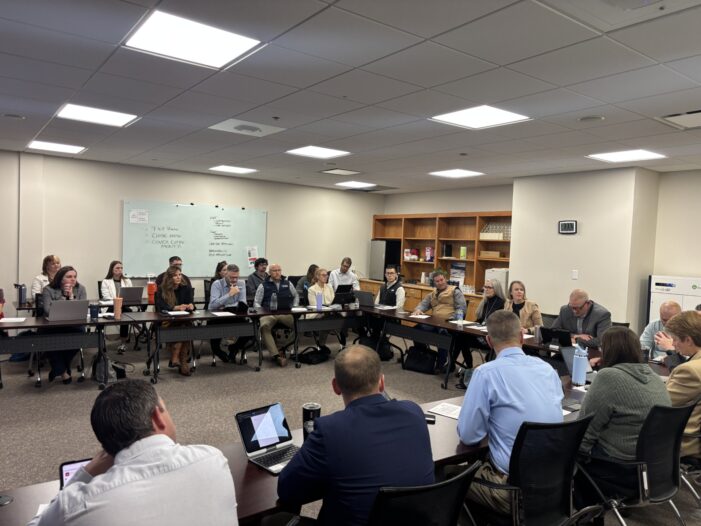
During a joint workshop between the Grand Junction City Council and the Mesa County Board of Commissioners on Feb. 3, regional transportation officials outlined what amounts to a growing structural funding gap for Grand Valley Transit.
The transportation officials said operating expenses are rising faster than revenue, and local governments may need to pull more from their own tax budgets to maintain current service.
Grand Valley Transit has never operated as a self-sustaining enterprise. Like most public-transit systems, the fares it collects cover only a small portion of what it costs to run the operation each day. The remainder has always been made up through federal grants and local tax dollars.
That gap between what riders pay and what the system costs to operate is known as a structural operating deficit, which is built into the funding model. What officials presented to city and county leaders on Feb. 3 shows the structural deficit is growing, as operating costs rise further beyond the amount in fees that are being collected over time. The presentation also showed the federal funding formula is flattening, leaving a continually larger share to be covered by local tax-supported budgets.
“Our cost to run Grand Valley Transit has increased pretty significantly since pre-COVID,” Dana Brosig, director of the Regional Transportation Planning Office, said during the joint meeting.
A chart titled “Federal Funding Needs vs. Funds Available (FTA 5307)” shows projected operating needs exceeding federal formula allocations later this decade. By 2030, the shortfall is projected at roughly $750,000 if service levels remain unchanged.
“We never just get given a pot of money. All of it is reimbursable,” Brosig said, referring to federal transit funding structures. When allocations are exhausted, she said, “We would have to cover what we would normally cover with federal funds with local funds.”
How the system is funded
Grand Valley Transit’s 2024 operating budget totaled $5.6 million, according to Table 10-2 of the 2024 GVT Expended Funds by Source.
Of that:
- $3.47 million came from Federal Transit Administration operating funds.
- $1.54 million came from local sources.
- $380,000 came from fares and other revenue.
- $250,000 came from state funds.
Federal operating funds represented approximately 62 percent of total operating support in 2024.
On the capital side, 2024 spending totaled $3.68 million, of which $3.22 million came from federal and state sources and $460,000 came from local funds.
Federal grants have also helped build the system. Mesa County has received more than $11 million in bus replacement and expansion grants over the past six years, and approximately 90 percent of the $8.2 million fleet-maintenance facility was federally funded, according to materials presented at the Feb. 3 meeting.
Capital grants, however, do not cover day-to-day operating costs.
Ridership down, cost per ride rises
Fares and other rider revenue brought in $380,000 of the $5.6 million operating budget in 2024, according to Table 10-2. That means riders paid for about 6.8 percent of operating costs.
In 2015, riders were covering about 15 percent of operating costs with an operating budget of slightly more than $3.3 million, according to the 2015 GVT Service Summary slide.
Historically, GVT’s fixed-route service began in 2000. Ridership peaked in the early 2010s at just over 1 million annual boardings, according to the Historical Ridership chart included in the 2015 strategic plan. By 2015, annual fixed-route boardings had dropped to 814,000.
The current projection for 2025 is about 600,000 unlinked passenger trips, according to the Grand Valley Transit System Overview slide, which amounts to roughly 1,640 to 1,700 boardings per day. An unlinked passenger trip counts each time a rider boards a bus, meaning transfers are counted as separate trips rather than unique individuals.
Brosig said the ridership pattern mirrors national trends.
“It did go up, and then it did kind of come down in the teens,” she said. “And then COVID, it really just, the floor fell out. And then since that time, we really built back pretty rapidly, and we’re always around 75, 80 percent of pre-COVID levels.”
Operating costs have moved in the opposite direction.
The operating budget increased from just over $3.3 million in 2015 to $5.6 million in 2024, according to the 2015 summary slide and Table 10-2. That represents roughly a 70 percent increase in operating spending over that period.
At a $5.6 million operating budget and approximately 600,000 projected trips, the system spends roughly $9.33 per ride. The base fare is $1.50, according to the system-overview slide. The remaining amount is covered by a combination of federal, state and local tax dollars.
In 2015, when the operating budget was just over $3.3 million and annual ridership was 814,000, the farebox recovery ratio was approximately 15 percent, according to the 2015 GVT Service Summary slide. The farebox recovery ratio measures how much of a transit system’s day-to-day operating expenses are covered by passenger fares. In 2024, that figure had fallen to 6.8 percent.
Transit provides workforce access, resiliency
While much of the Feb. 3 discussion focused on funding pressures, Brosig also emphasized what she described as the broader value Grand Valley Transit brings to the community.
“About 73 percent of our riders are employees or students,” Brosig said, “so we see this really as like a kind of safety-net system.”
She said housing and transportation tend to be the two largest expenses in a household. When housing costs are high, “people cannot always afford a car,” leaving transit, biking or walking as primary transportation options, she said.
Brosig also described transit as a form of transportation resiliency.
“One way of thinking about transit, it also is kind of an insurance policy,” she said. “Where you have an alternative way of getting around to create kind of resilience in your transportation system.”
During construction of the fleet-maintenance facility, she said about 200 employees worked on the project, with 26 of 36 companies involved being local.
“We do see transit as kind of a local economic driver,” she said.
She also noted the transit contractor employs about 50 local workers and provides commercial driver training that can lead to other jobs in the regional economy.
Local governments covering operating share
The local share of operating costs is funded through an annual Intergovernmental Agreement (IGA) among Mesa County, Grand Junction, Fruita and Palisade.
The 2026 IGA totals $3,076,799 and is distributed as follows:
- Mesa County: $1,999,919.
- Grand Junction: $923,040.
- Fruita: $92,304.
- Palisade: $61,536.
“If we don’t have other funding sources, that’s what the IGA would have to be,” Brosig said, referring to projections showing local contributions rising toward roughly $4 million annually by the end of the decade if no new revenue source is approved.
Toward the end of the transportation presentation, officials discussed: a July 24 deadline to notify intent to participate in the 2026 General Election; an Aug. 25 IGA deadline; and a Sept. 4 deadline to approve a potential transportation-funding ballot question.

GVT operating deficit grows added by The Business Times Staff on
View all posts by The Business Times Staff →