
Local Johnson-Su compost classes aim to build soil health from the ground up
Brandon Leuallen, The Business Times
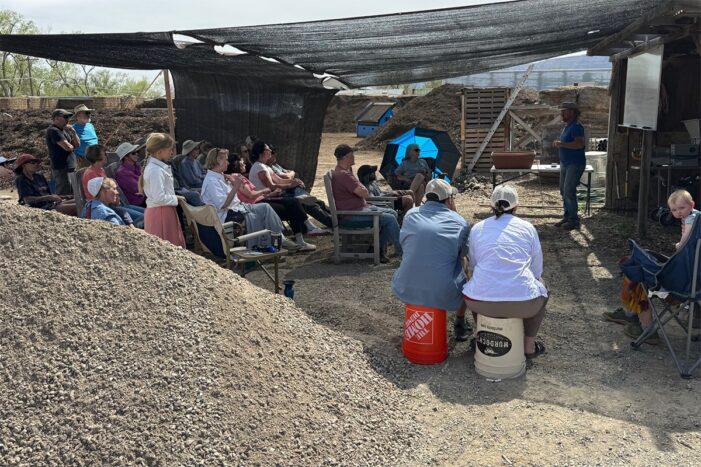
A series of upcoming classes in Grand Junction is set to introduce residents, gardeners and small-scale growers to a different way of thinking about compost, not just as waste management, but as a tool to rebuild soil biology from the ground up.
David Gingerich of BioReGenesis LLC will lead multiple workshops in April at Bookcliff Gardens, focusing on fundamentals of composting, soil-health principles and the Johnson-Su composting method.
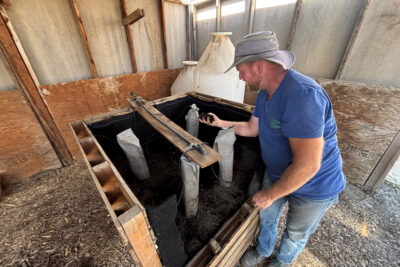
The classes are scheduled for: Monday, April 20; Wednesday, April 22; and Friday, April 24 at the Bookcliff Gardens main greenhouse. A separate Johnson-Su workshop is planned for April 11, which will include classroom instruction and a hands-on bioreactor build.
FROM LANDSCAPING TO SOIL BIOLOGY
Gingerich said his path into composting began after moving away from traditional landscaping and fertilizer-based approaches over the last five years.
“Yeah, I started looking at how there’s some direct correlation here between gut health, or our health, and soil health,’” he said. “So I was like, I don’t know what I’m doing, but I’ve got to do something about it.”
That realization led him to sell his previous business and shift away from conventional practices that rely heavily on synthetic inputs.
“I finally started figuring out that’s not the way to go,” he said.
Today, his work focuses on building biologically active compost designed to improve long-term soil function.
WHAT IS JOHNSON-SU COMPOST?
At the center of the upcoming classes is Johnson-Su compost, a method developed by Dr. David Johnson and Hui-Chun Su Johnson to emphasize fungal-dominant biology and extended processing time. Unlike faster composting systems, the material is typically allowed to break down for at least 12 months.
“It’s a really fungally dominant compost,” Gingerich said. “Time is the most important element in compost.”
He uses bioreactors filled primarily with carbon-rich materials such as leaves, maintaining moisture and allowing microbial life, including fungi and worms, to develop over time.

That finished compost is often turned into a liquid extract, which can be applied in very small quantities.
“We do two pounds per acre,” he said. “At that rate, you’re still getting several million fungal spores per square foot and tens of millions of bacteria.”
Rather than applying compost in large volumes, the extract acts as a biological inoculant, introducing beneficial microbes into the soil.
HOW CUSTOMERS USE IT
Gingerich said customers are using the product in a variety of ways, from home gardens to orchards and pasture systems.
In some cases, the liquid extract is applied through irrigation systems or mixed into sprayers for field use.
“One other facet of the business that we do is we take that around, and we inject it into sprinkler systems for people,” he said. “Primarily drip systems.”
Some agricultural users also incorporate the liquid into planting operations, running it through equipment as they seed fields.
A DIFFERENT APPROACH TO COMPOST
Gingerich said a key part of his teaching is helping people understand the difference between compost.
“The way I describe it is there’s two kinds of compost,” he said. “One is waste reduction. The other is soil health.”
While both serve a purpose, he said systems focused on soil biology require more control over inputs and significantly more time to develop.
WHAT THE CLASSES WILL COVER
The April classes will build from basic concepts to more advanced topics, including microbial diversity, mineral balancing and soil structure.
A key component will be hands-on instruction, including how to extract and apply compost in liquid form.
“We’ll do different levels of extraction: in a bucket; in a barrel; and with our larger machine,” Gingerich said.
The sessions will explore what he calls the four pillars of soil health – biology, minerals, structure and organic matter – and how they work together as a system.
Gingerich said the growing interest reflects a broader demand for alternatives to traditional soil practices.
“We are serving a definite need in the valley,” he said.
Johnson-Su Composting: Key Facts
Developed by:
Dr. David C. Johnson and Hui-Chun Su Johnson, researchers affiliated with New Mexico State University, where the method was developed through years of soil microbiology research and field trials.
What it is:
A composting method designed to produce biologically rich, fungal-dominant compost focused on soil health rather than rapid waste breakdown.
How it works:
- Uses a static, aerated bioreactor.
- Built primarily with carbon-rich materials such as leaves or wood chips.
- Not turned during the process.
- Maintained with consistent moisture and airflow.
Timeframe:
Typically processed for about 12 months to allow full microbial development, as emphasized in Johnson’s research.
Key components:
- Fungi-dominant biology.
- Worm activity.
- Diverse microbial populations.
How it’s used:
- Applied in small quantities directly to soil.
- Extracted into liquid form for irrigation or spraying systems.

Composting gets classy added by The Business Times Staff on
View all posts by The Business Times Staff →