
Brandon Leuallen, The Business Times
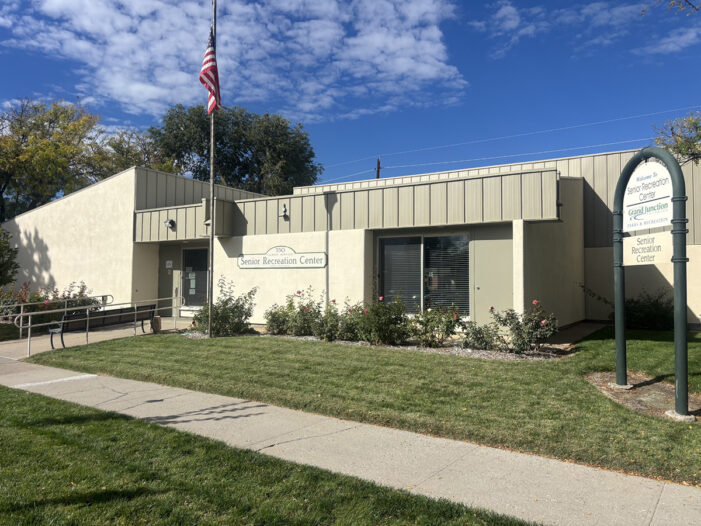
Grand Junction’s Senior Recreation Center will remain at 550 Ouray Ave. after City Manager Mike Bennett reversed a proposed closure, acknowledging the city had moved too abruptly and underestimated what residents would lose by shifting activities to the new Community Recreation Center.
Bennett announced the decision at the beginning of the Oct. 21 Grand Junction City Council meeting, before residents who had come to speak about the center addressed the council.
The city will revise its recommended 2027 budget to continue providing space to the nonprofit that operates the center. A new agreement with the nonprofit’s board is to be developed by January 2027, according to the city’s written announcement.
The reversal followed an Oct. 15 meeting at the Senior Center and a week of feedback from users who said the proposal threatened friendships, familiar routines and a gathering place dedicated to older adults.
It also raised questions among residents about consequences they said they had not anticipated when supporting the Community Recreation Center, including the potential loss of existing facilities they had relied on.
Bennett takes responsibility
Bennett told the audience that the recommendation to close the center was his responsibility.
“This was my decision,” he said.
He said departments had faced difficult reductions as the current leadership team worked to address an inherited structural deficit that began in 2021.
But he acknowledged the city’s handling of the Senior Center proposal had caused concern.
“The communication was too abrupt and too quick,” Bennett said, “and I own the fact that it caused a lot of consternation and concern.”
He said the feedback helped him recognize that the Community Recreation Center’s programs and amenities could not replace everything the Senior Center provided.
“But they don’t replicate what a senior center is able to offer,” Bennett said.
He also said the original proposal had been presented primarily as an efficiency measure.
“When we brought up this one, we said it wasn’t as much of a budget reduction as it was an efficiency standpoint,” he said. “But that efficiency standpoint overlooked some of the impact.”
Operational decision, with council controlling the budget
Although the announcement came at a council meeting, the reversal was Bennett’s administrative decision, rather than a council vote to keep the center open.
During the meeting’s closing “other business” discussion, Council member Cody Kennedy described the distinction between the city manager’s operational responsibilities and council’s role in establishing policy and approving the budget.
“The charter strictly prohibits us from interfering with operational items, such as whether something’s gonna continue or close,” Kennedy said.
He said council could influence funding through budget allocations, but he credited Bennett and city staff with reconsidering the proposal.
“When we’re getting credit tonight for making this change, that’s not where the credit lies. It’s not with us,” Kennedy said. “It’s with the city manager and his team.”
Council is scheduled to consider adoption of the 2027 budget in November.
What residents understood before the vote
Previously, when questioned at the Oct. 15 meeting at the Senior Center about the recreation center’s role in the proposed closure, Parks and Recreation Director Ken Sherbenou pointed to community surveys and working groups that had identified the Community Recreation Center as the city’s highest recreation priority.
Residents countered that those responses might have been different had people known the Senior Center could close, saying support for a new facility did not mean support for losing an existing gathering place.
Sherbenou said the closure proposal stemmed from General Fund budget challenges rather than the Community Recreation Center’s opening. Bennett reiterated during the Oct. 21 meeting that the Community Recreation Center has separate, dedicated funding and is not responsible for the General Fund deficit.
The proposed move nevertheless had implications for both budgets. Closing the Senior Center would have reduced General Fund expenses by approximately $100,000 annually, helping meet the Parks and Recreation Department’s $900,000 reduction target. It also could have made the building available to departments occupying more expensive leased space, although no specific relocation had been identified. Membership dues from seniors who began paying to use the Community Recreation Center would have generated revenue for its separate fund, depending on how many users made the transition and purchased memberships.
The Community Recreation Center could also receive less revenue than anticipated if voters approve funding to repair and retain Orchard Mesa Pool. Its revenue projections assumed some pool users would transfer to the new facility. Keeping the pool open could reduce those transfers and the associated Community Recreation Center revenue.
A place to belong
At both meetings, residents described the Senior Center as a place for companionship, familiar routines and informal activities, particularly for older adults who may have little interest in an athletic-recreation facility.
Senior Center users gather to play cards, do puzzles, attend bingo, participate in karaoke or simply sit and visit. For some, the center provides one of their few regular opportunities to leave home and spend time with friends. Others described finding new friendships after losing longtime companions and appreciating a place where people recognize them by name.
Several speakers emphasized the needs of people in their 80s and 90s, including those with limited mobility, transportation difficulties or fixed incomes. They questioned whether those residents would feel comfortable navigating a larger facility shared with children, families and people exercising.
The concern was about more than whether the Community Recreation Center had accessible equipment or rooms available for senior activities. Residents wanted to preserve a dedicated gathering place where they could arrive on their own schedules, stay a while and enjoy the company of people who understood their stage of life. Bennett later acknowledged that distinction in his remarks at the council meeting.
Asking for time and alternatives
During the Oct. 15 meeting, residents challenged the speed of the proposed closure and asked for an opportunity to help keep the center open.
They requested a breakdown of building expenses, so they could explore fundraising, reduce costs or determine whether users and supporters could cover part of the city’s contribution.
Others asked for more time to seek grants, identify donors or consider another location.
During Wednesday’s council meeting, several speakers offered to help find financial support. Suggestions included seeking a benefactor, approaching local philanthropists and using the organization’s nonprofit status to raise money.
Speakers said developing that support would take time and could not reasonably be accomplished within the few months remaining before the proposed closure. Representatives of the center also described renewed interest in helping the organization, with offers of assistance and a willingness to work with the city on its future.
Constructive feedback and personal attacks
Bennett thanked residents who provided specific examples and constructive feedback, but said angry personal attacks against public employees did not drive the reversal.
“Did not move the needle on this,” he said of those attacks. “It did not go into our consideration.”
He said the useful feedback helped officials understand the center’s distinct role and reconsider the proposal.
Not everyone accepted the earlier engagement as adequate. A speaker identifying himself as Rick Parkinson said he left the Oct. 15 meeting angry, because questions were met with repeated talking points about the Community Recreation Center and SilverSneakers. “I felt that they really didn’t see or hear me,” he said.
Steve Garner, another center participant, thanked Bennett and apologized for others’ behavior.
“I would like to apologize on behalf of the folks who were not so civil at the meeting before,” Garner said.
At several points during Wednesday’s public comment, Mayor Laurel Lutz asked attendees to refrain from clapping and other audience responses, so speakers could be heard and the meeting could proceed.
Kennedy also expressed disappointment with conduct at the earlier meeting while encouraging residents to continue engaging with the city.
“I think this is a good example of showing that the city listens and cares, and that we work together as a community,” he said.
Questions about past spending
Some speakers connected the proposed closure and broader budget reductions to previous city decisions.
During public comment at the council meeting, Donald Hunger criticized commitments made under former City Manager Greg Caton and previous councils, citing riverfront development, the zip line, apartment incentives and other projects.
“These are the commitments from the previous administration that helped create the structural deficit,” Hunger said.
His remarks presented a broader argument that current officials are managing the consequences of earlier spending decisions.
Kennedy later referenced Hunger’s remarks as raising important details about the city’s current position and said difficult budget changes remained necessary.
Mayor calls for discussion of Beilfuss’s conduct
The Senior Center debate also prompted a closing exchange about Council member Scott Beilfuss’s communications.
Following Kennedy’s remarks, Lutz said the council needed to discuss how Beilfuss represented the body and communicated about issues. She said he had supported and shared comments directed at staff.
“I have a very big problem with that, and I think this is something that we’ve already discussed a couple times,” Lutz said.
She said passion about an issue did not justify finger pointing or name calling and asked whether other council members agreed to a further discussion. The meeting transcript recorded an affirmative response but did not identify individual respondents.
Lutz did not identify the specific comments during the exchange or set a date for the discussion.

City reverses thinking, will keep Senior Center open added by The Business Times Staff on
View all posts by The Business Times Staff →