
Brandon Leuallen, The Business Times
After a summer of drought, Grand Junction received 2.43 inches of precipitation in October, nearly two-and-a-half times the normal amount for the month, said National Weather Service meteorologist Brooke Scholtens. The city had recorded 4.11 inches in the first nine months of the year combined.
Scholtens said October’s precipitation was 1.44 inches above normal, making it about the 11th wettest October on record locally. The largest 24-hour total came Oct. 22–23, when 0.84 inches fell.
In the Grand Valley, dry conditions during the summer brought looming threats of irrigation being limited, but the wet conditions in the fall affected agriculture and construction projects and even limited golf-cart use at local courses at times.
Reservoirs rebound
Crucial reservoirs that hit historic lows in the summer began to gain water before the winter snowfall covered the Rockies.
Upstream on the Gunnison River, Blue Mesa Reservoir rose 5.7 feet and gained about 21,100 acre-feet of storage between Sept. 30 and Nov. 4, according to provisional Bureau of Reclamation records.
Storage was still falling in mid-October before it began to climb. By Nov. 4, an estimated 1,255 cubic feet per second was flowing into the reservoir, while 129 cubic feet per second was being released.
Farther downstream, Lake Powell rose 17.81 feet and gained just over 1 million acre-feet over the same period. The rise accelerated after Oct. 20 as inflows from across the upper Colorado River Basin increased, and releases from Glen Canyon Dam held near 6,500 to 6,700 cubic feet per second.
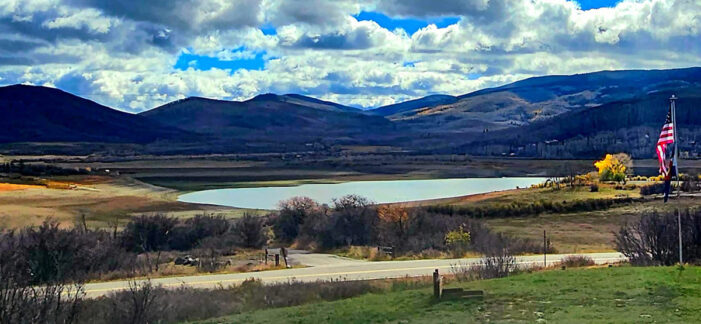
The wet fall helped Vega Reservoir near Collbran climb from about 7 percent full to about 19 percent full. The added water improved the outlook going into winter, though a good snowpack will still matter for next spring.
Before the rebound, Vega Reservoir was at its lowest fall level since 2002, said Bruce Michaelsen, manager of the Collbran Water Conservancy District. The district began diverting creek water into Vega after a water call ended in mid-October. By Nov. 5, the reservoir had gained a little more than 4,000 acre-feet.
During the latest storm, more than 500 acre-feet flowed into Vega on each of two consecutive days, Michaelsen said. The district has been diverting water since the early 1960s, and he said no one he knew could recall rain bringing the reservoir up that much. The gains brought Vega closer to its usual fall level.

Local lodges and other businesses felt the effects all summer and watched the rains make a difference in real time.
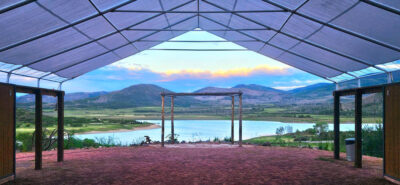
The drought changed the view from Vega Lodge’s wedding venue. By the time the lodge hosted a couple of weddings near the end of summer, guests could barely see the water from the seating area, said Layne Peter, a Vega Lodge employee. Most of the visible water was near the dam.
According to Colorado Parks and Wildlife, both ramps were closed on July 23 for the rest of the season because of low water. Hand launching was still allowed. Peter recalled that some boaters managed to launch after the ramps closed, while others got their vehicles stuck in the mud.
Wet ground slows two Mesa County road projects
Heavy rain affected other local improvements.
The moisture slowed work on Mesa County’s Orchard Avenue Safety and Connectivity Project and the second phase of improvements to 32 1/2 Road in Clifton, KKCO reported. Josh Springer, the county’s construction group manager, told the station that crews lost workdays because the ground was too wet. Heavy equipment can get stuck in mud, and saturated soil has to dry before crews can compact it.
Springer said runoff also washed away rock where a contractor had built a temporary dam to route water around a pipe. The contractor had to return to repair the work. The county did not expect the schedule changes to affect project budgets.
Looking ahead to snowpack and spring
Although there has been a significant amount of moisture in a short period of time that has given the area reason to believe the drought conditions can improve next year, the winter snowpack will be the deciding factor.
On Grand Mesa, the snowpack at the Mesa Lakes monitoring station held the equivalent of 1.4 inches of water on Nov. 4. Scholtens said the Climate Prediction Center expected wetter-than-normal conditions in parts of the region over the next month, but it is harder to say what will happen after that.
At Vega Reservoir, Michaelsen said fall rains brought water levels closer to where they usually are heading into winter. He said the gains gave him reason for hope, but he cautioned that the outlook could change if dry weather returned.
“If we don’t get a good snow year, that’s not gonna pull it out,” Michaelsen said.

Fall rains bring promise, challenges added by The Business Times Staff on
View all posts by The Business Times Staff →