
Longtime Pilates instructor returns to Grand Valley, opens studio in Fruita
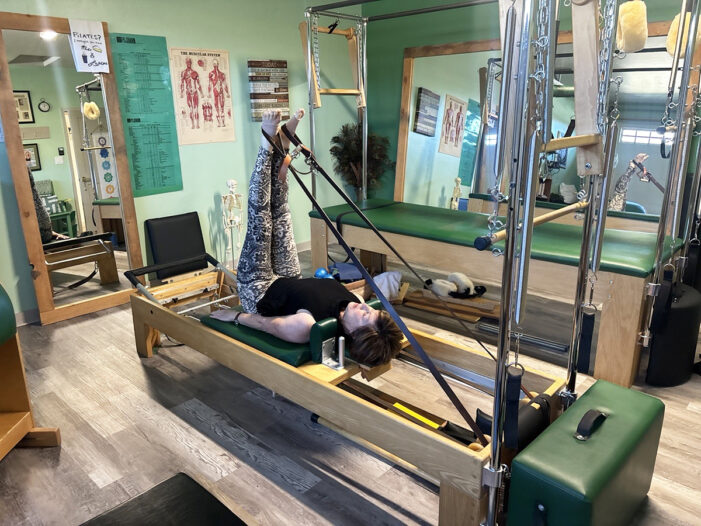
After living and teaching in Maine, Caren Crandall has returned to the Grand Valley with Old School Pilates Studio in Fruita.
Crandall previously ran Core Connections Pilates Studio in Mesa County. At her new studio, she teaches classical Pilates, drawing on training that traces back to Joseph Pilates himself.
A Colorado native, Crandall said she missed the mountains, the weather and the people while living in Maine. After returning, she immediately noticed how often strangers waved or said hello.
“It’s been really nice to be back,” she said.
The roll-up that changed her career
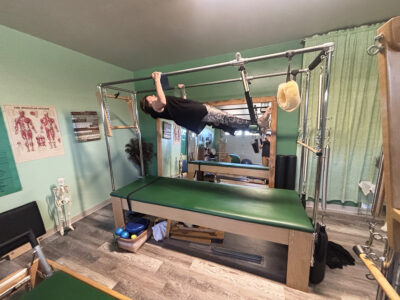
Crandall said she started teaching aerobics in 1980, in the era of Jane Fonda and leg warmers. She went on to compete nationally, become a certified personal trainer and manage a fitness club in Wyoming, where she hired and trained instructors. She also served for four years as the Wyoming state fitness representative for the IDEA Health & Fitness Association. She attended industry conventions when step aerobics and spinning were new and brought what she learned back to the club.
At a continuing education workshop in Denver in the early 1990s, Crandall heard people talking about Pilates. She joked that she thought it might be a game like bocce. Then she watched an instructor move so smoothly that she looked like she was floating.
The instructor asked the fitness professionals in the room to try a roll-up. Despite years of training, Crandall couldn’t do it. As she remembers it, neither could anyone else in the room.
“I went home, and I thought something’s really missing in my life,” Crandall said.
She quit her job in Wyoming, moved in with her mother and enrolled in an 18-month teacher-training program at The Pilates Center in Boulder. She said she spent up to 12 hours a day in the studio and completed the program in 2000, according to her studio brochure.
“So it humbled me,” she said. “And it changed me, and I’m grateful for it every day.”
Keeping the original method
Joseph Pilates called his method “Contrology.” He and his wife opened a New York studio after immigrating to the United States in 1926. The method pairs controlled movement with breathing, and it caught on with dancers before reaching a wider audience.
Crandall’s training traces back to Joseph Pilates through Romana Kryzanowska, who studied directly under him. Crandall said her Boulder teachers began studying with Kryzanowska in New York in 1987. They trained with her for three years before opening their teacher-training studio in Boulder in 1990.
Crandall said she tries to teach Pilates as close to the original “Old School” method as possible. Some clients tell her they’ve taken classes for years without learning to time their breathing with each exercise. She teaches them to use the exhale to engage their deep abdominal muscles, so the core helps control the movement, and the back and shoulders don’t take over.
“But in real Pilates, we don’t do anything without the breath,” she said.
Why Pilates?
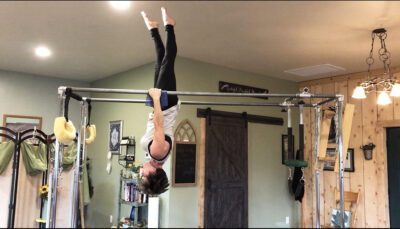
Before Pilates in the gym, Crandall knew how to get stronger by lifting heavier. Pilates made her pay closer attention to which muscles did the work. She said people tend to favor movements they already do well and rely on their strongest muscles when an exercise gets difficult.
“You have to work it uniformly, so that everybody does their own job in the body,” she said.
That means noticing when the shoulders, thighs or back take over a movement. She teaches clients to use their exhale to engage their abdominal muscles and to maintain length through the body as they move.
“What makes it really different than gym work is we work on elongating rather than compressing,” Crandall said.
One-on-one instruction
Crandall prefers to start with private sessions, so she can tailor the workout to what each client wants to improve. If someone comes in with a stiff or sore lower back, she watches how they breathe, where they tense up and whether their back is taking on work their hips or abdominal muscles could share. She said she uses slow, controlled movements to ease tension in tight areas and encourage circulation.
When clients have changed how they move after an injury, Crandall looks for where they brace or shift the work to another part of the body. She adjusts the exercise, so they can practice moving with less tension.
Crandall said she wants to work with people who are serious about improving and willing to put in the practice. That can mean repeating a small movement several times until they recognize when they tense up and learn how to breathe through it. Once clients know what to pay attention to, she said, they can carry that work into a group class.
“I don’t think Pilates is something you learn in a group,” Crandall said. “It’s something that’s practiced in a group.”
Crandall said she has worked with rodeo competitors, gymnasts and dancers. She said viewers may also see Olympians doing Pilates in warmup footage without realizing what they’re watching.
“All the ice skaters, the swimmers, like they’re all warming up, doing Pilates because that’s what they’ve been trained to do,” she said.
Crandall also works with clients who want to keep exercising after physical therapy ends, including people who have had hip or knee replacements.
About Old School Pilates
Old School Pilates Studio offers private and semiprivate sessions and mat classes at 2003 Korima Drive in Fruita.
The studio can be reached at 970-787-0338 or through oldschoolpilates.net.

Crandall brings old-school Pilates back to Grand Valley added by The Business Times Staff on
View all posts by The Business Times Staff →