
Picture a Colorado family sitting around the kitchen table on a Sunday evening.
The bills are spread out. There’s the mortgage, groceries, car insurance and another increase in health-insurance premiums. Maybe their child needs braces, or someone needs new eyeglasses. They’d like to save for college, but there’s only so much money to go around.
So they make choices. They prioritize. Sometimes they go without.
Now consider what’s happening at the state capitol.
The Common Sense Institute recently examined 88 categories of medical services, and Colorado’s Medicaid program, funded jointly by state and federal taxpayers, covers up to 80. Individual health-insurance plans, which families purchase themselves, cover 65 categories. A representative employer-sponsored plan, the kind many working Coloradans help pay for through their jobs, covers just 62.
The comparison becomes even more interesting when you look at what’s covered.
A working family may pay out of pocket for adult dental care, orthodontics or eyeglasses. Yet Colorado’s Medicaid program includes those categories, along with certain massage therapies, equine therapies and other specialized services, subject to medical necessity and eligibility requirements.
Some of these services are essential for people with disabilities or serious medical conditions. Others reflect coverage decisions that deserve closer examination. And the number of covered categories doesn’t tell us the cost or quality of care.
But it raises a fair question.
How did Colorado arrive at a point where its taxpayer-funded program covers a broader menu of medical services than the insurance many of the taxpayers financing it can afford for themselves?
And more importantly, can we sustain those promises?
This isn’t about begrudging someone necessary medical care. It’s about fairness to the working families paying the bills and responsibility to the vulnerable Coloradans depending on the system.
Because when government promises more than it can afford, everyone eventually pays the price.
Colorado’s Medicaid budget problems didn’t begin with Washington’s latest funding changes. Those changes will add pressure, but our state was already facing difficult financial realities.
The numbers tell the story.
Colorado expanded Medicaid eligibility in 2014. By fiscal year 2015, the Department of Health Care Policy and Financing, which administers Medicaid, spent approximately $8 billion.
A decade later, that figure had doubled to roughly $16 billion.
The rest of Colorado’s budget grew 64 percent during that period. Medicaid’s administering department grew 101 percent.
And the expansion didn’t happen by accident.
Between 2019 and 2025, Colorado lawmakers enacted 182 health-care bills that established new administrative requirements, expanded services or added regulations. CSI estimates those changes added at least $858 million in ongoing annual state costs, with 88 percent attributable to changes in public coverage.
That’s not simply inflation. Those are policy decisions with financial consequences.
Perhaps the most revealing statistic is what happened when Medicaid enrollment declined.
Between fiscal years 2023 and 2025, average monthly enrollment fell 30 percent, from 1.72 million to 1.21 million people.
You might expect spending to decline as well.
Instead, it increased 15 percent.
Annual spending per enrollee jumped 64 percent, from $7,929 to $12,997.
Fewer people were enrolled, yet the program cost substantially more.
Certainly, some of that increase reflects more expensive and complex medical needs. Long-term care and support services alone reached $5.3 billion in fiscal year 2025. Those services are especially important to seniors and people with disabilities.
But that makes understanding the spending even more important.
We should know which services are federally required, which Colorado has chosen to add, what those choices cost and whether they’re delivering meaningful results.
That’s basic accountability.
And the consequences reach far beyond health care.
In fiscal year 2013, Colorado’s health-care department accounted for approximately 27 percent of statewide operating appropriations. By fiscal year 2025, that share approached 37 percent. It’s projected to reach 41 percent in fiscal year 2027.
Think about what that means for everything else.
Every additional dollar committed to one program is a dollar unavailable for another priority.
It’s money that cannot simultaneously support a classroom, improve a dangerous road or strengthen public safety.
And when budgets become strained, families caring for someone with a significant disability may worry whether the essential services they depend on will remain available.
That’s what concerns me most. The true cost of unsustainable government spending isn’t just what comes out of a taxpayer’s pocket. It’s the opportunities we lose and the promises we may no longer be able to keep.
As a Mesa County commissioner, I’ve watched this problem reach local government. Our county has identified nearly $10 million annually in unfunded mandates – responsibilities imposed by the state without the funding necessary to carry them out. Those dollars could otherwise maintain roads, support law enforcement and provide essential community services.
We’ve had to reduce spending, examine priorities and make difficult decisions because, unlike the state, we cannot simply shift those responsibilities to another level of government.
Families understand this instinctively. You cannot spend the same dollar twice.
And you cannot solve a long-term spending problem by continually asking someone else to pay more.
Fortunately, Colorado has an opportunity to change course.
The Legislature created a bipartisan Commission on Medicaid in 2026 to examine the program’s sustainability and identify opportunities to control costs while protecting essential care. That work deserves serious attention, not another round of political finger-pointing.
But balancing the budget is only part of the solution. We must also remember how prosperity is created. It begins when someone takes a risk, starts a business, develops a technology, expands a farm or creates a job. Those efforts generate the economic activity that helps support our schools, roads and safety net.
Colorado has extraordinary opportunities in energy, natural resources, agriculture, manufacturing and technology.
Competitive taxes, sensible regulations, quality education and dependable infrastructure can help create an environment where investment and innovation flourish.
And when families keep more of what they earn, they have greater freedom to make choices about their health care, their children’s education and their futures.
That’s the Colorado spirit I believe in.
Our state was built by people who valued hard work, independence, innovation and neighbors helping neighbors. Those values aren’t incompatible with compassion. They’re what help make lasting compassion possible.
I remain optimistic that Colorado can restore fiscal discipline while protecting the people who genuinely need assistance. But first, we must be honest about the numbers, responsible with our commitments and fair to the families financing them.
Eventually, you run out of other people’s money. And when that happens, the greatest loss isn’t simply financial. It’s the education we couldn’t fund, the opportunities we couldn’t create and the essential care we promised but can no longer sustain.
A compassionate government shouldn’t be measured by how much it promises, but by whether it can keep those promises without sacrificing the opportunities of the people it serves.
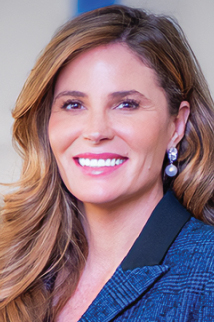
Bobbie Daniel serves as Mesa County commissioner for District 2.

Colorado’s Medicaid crisis: Who pays the price when government promises too much? added by Bobbie Daniel on
View all posts by Bobbie Daniel →