
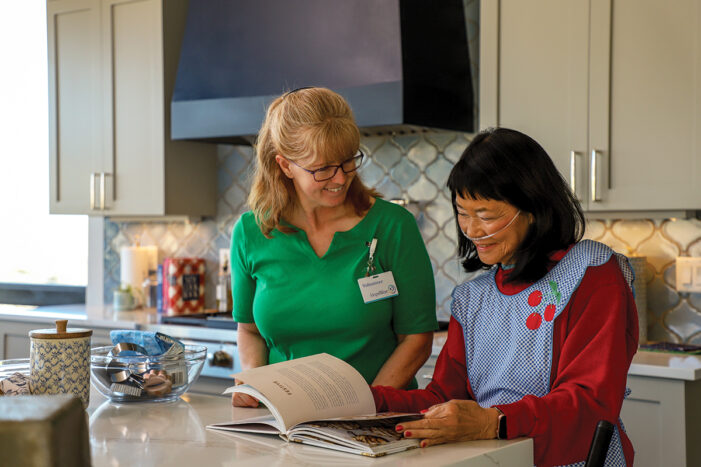
HopeWest rolled out an ad campaign to show hospice is about living comfortably and more fully at the end of life
Tim Harty, The Business Times
To everyone who thinks hospice care is simply where people go for their final couple weeks, or even final few days, just waiting to die, HopeWest politely offers this correction to that misconception:
Hospice is not about giving up. It’s about living comfortably and more fully when the end of life is nigh.
As a nonprofit provider of hospice care as well as palliative care, PACE (Program of All-Inclusive Care for the Elderly), grief support and dementia support, HopeWest occasionally sees the signs that remind it to remind others about what it does and why it’s important.
That’s why HopeWest launched an advertising campaign this spring to educate the people of Western Colorado about hospice care.
HopeWest president and CEO Deneen Silva said her organization often sees peaks and valleys in individuals’ length of stay in hospice, and when those stays are getting shorter, it’s time to start spreading the word again that earlier entry into hospice leads to higher-quality endings for the dying and their families.
“What research supports over and over and over is that earlier and more timely referrals (to hospice) for people experiencing a life-limiting or advanced illness, it really predicts the quality and the overall experience,” Silva said. “So, the earlier that somebody comes on board, the better the outcomes are medically, emotionally, psychologically. I mean, it’s a litany of things that enhances a person’s experience while they’re going through that.”
She added it doesn’t affect just that person. It affects their caregivers, their families, their community around them.
When HopeWest detects more people coming on board with shorter times in hospice, Silva said, “It really is a signal for us that we need to make sure we’re out there. We’re spreading the word, and we’re sharing all of the wonderful things and programs that Hope West provides.”
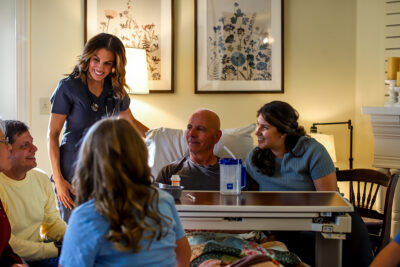
One of the additional things HopeWest points out is people need to educate themselves about hospice care sooner.
“Most people don’t shop for hospice proactively,” Silva said. “Hospice is shopped for, or hospice is sought, after there is a critical event in someone’s life. And that’s a very tricky time to seek out the best level of care.
“And so, what we try to tell people is: Know HopeWest before you need us. Learn about the programs that we offer, because oftentimes individuals who are facing acute or advanced illness, they’re kind of peaking and flowing themselves throughout the process. And so if hospice isn’t the right moment, we have other programs that can bring people under our umbrella of care and then lead them to where they need to go at the most timely point in their journey.”
There is no downside to being prepared and acting sooner on hospice care when the end is nearing for a loved one.
Acknowledging she has been a bedside nurse, a case manager and a hospice administrator, “so I’ve done a lot of different things in hospice,” Silva said, “Nobody ever says, ‘Oh, I wish I would have waited longer to have hospice services.’
“What I hear within three to five days is: How did I live without hospice services?”
Silva said driving home that message, that sooner is better for hospice care, is important, because the alternative is frustrating and undesirable.
In addition to noticing the shorter length of hospice stays, Silva said HopeWest’s ad campaign also was necessary to clarify what it does, which is much more than hospice.
“Hope West offers lots of different programs, and I think there started to be a little bit of confusion between each of the various programs,” she said.
When patients wait until they have just a couple weeks to live before getting hospice services, Silva said, “That’s not enough time. It’s just not enough time. And you cannot do that vital work where you can manage individuals’ physical symptoms, let alone their emotional and the mental-health issues that sometimes stem during this process. It’s important to have the time.
“And you can imagine when you’re caring for somebody in (their) home, that you need time to build rapport and trust, so that you get those outcomes that are desirable.”
Silva revisited the need to shop for hospice care in advance as an important step to maximize time with loved ones when a patient’s days are dwindling.
“In our culture, we don’t embrace death and dying,” she said. “I mean, it’s not what we do. If anything, we push it off. We don’t want to look at it until it’s flat in our faces, or our loved one is experiencing it, and that’s not the optimal time.
“So, the more that we can normalize and explain it – we’re here to support you, no matter where you are in this process – that means that someone might have the advantage of one day, two days, three days, four days more time, because we’re engaging earlier.”
Another reason to market what HopeWest does is Colorado has an increasing population of elderly residents. HopeWest said data shows:
- Colorado had the second-fastest-growing population over age 65 in the nation from 2010 to 2020.
- The Colorado Department of Local Affairs State Demography Office projects the trend of an aging Colorado population will continue into the next decade.
- The number of people 65 years of age and over is expected to grow 36 percent from 2020 to 2030.
That means more people heading toward a day when hospice care might be needed or wanted, so shopping in advance for hospice care is advised.
HopeWest’s data also said about one in six Americans fall into the Sandwich Generation, a group of people usually 40 to 60 years old who may one day be in a situation where they must care for aging parents. And they may have to do that while raising their own children.
Being a caregiver to an elderly parent is difficult for families, Silva said, and an end-of-life scenario is more challenging and stressful.
“That’s why I think our services are so important,” she said, “because we can slide in there and we can provide that support and create that network of care globally around a person.”
This article only scratches the surface of what HopeWest does, and the same goes for its advertisements. The hope is people will see the advertisements, realize there is more worth learning, then take the steps that HopeWest knows will benefit patients and their families in the long run.
Silva mentioned a television commercial that HopeWest has been airing, then said, “That commercial, we’ve had more people say, ‘Holy cow, that’s what hospice is like?’”
The commercial shows happy people doing unexpected things with someone receiving hospice care.
“It’s gonna give you a new perception of what it really is all about,” Silva said. “And we want people to experience joy and laughter and happiness in their final days, weeks, months, whatever that time frame is. And it can be achieved.
“I do believe wholeheartedly that hospice can help you achieve that.”

What does HopeWest do?
It provides hospice, palliative care, PACE (Program of All-Inclusive Care for the Elderly), grief support and dementia support.
What is HopeWest’s stated mission?
To profoundly change the way its communities experience aging, serious illness and grief – one family at a time.
What is hospice care?
HopeWest defines it this way: Hospice is end-of-life care that is provided by a group of specialists to help manage symptoms and pain, and it supports the patient and family during a very difficult time.
Forget preconceptions, this is what you should know
HopeWest wants people to know the truth about hospice care is:
- Earlier intervention positively impacts quality of life and leads to better outcomes for patients.
- It provides patients more control and supported experience.
- It offers support, so you can be present in life, live your best life during the time you have left.
- Patients still experience happiness and joy.
- It provides care for you wherever you call home.
- Patients still have primary care doctors and other providers.
- Patients can disenroll from services at any time.
Goal of providing exceptional care HopeWest said its intent is to:
- Anticipate patient needs, ensure satisfaction and provide exceptional care.
- Transform overwhelming/fearful time into one of comfort, healing and hope.
That includes:
- Helping patients and their families prepare for what will come next.
- Providing support around the clock, so patients and their families get their questions answered.
- Providing respite for caregivers through its network of volunteers.
Already great and getting better
HopeWest said its hospice quality scores currently maintain four stars, and, “We are well on our way to becoming a 5-star hospice, with 93 percent of families saying they would recommend HopeWest.”
How to enroll
Call HopeWest at 970-241-2212 or visit HopeWestCO.org and fill out its online contact form.
Then, HopeWest says, “We will take care of the rest.”
Making things easy on the wallet
HopeWest said its hospice care is covered by most major insurances and Medicare.
Also, as the Western Slope’s only nonprofit hospice provider, it will care for patients regardless of their ability to pay.
Also worth knowing about HopeWest
On an information sheet HopeWest provided to The Business Times, it says Hope West:
- Was built by the community, for the community, and it is grateful for the supporters who make HopeWest possible.
- Continues to provide the same exceptional care its community has trusted for nearly 35 years.
- Is the only hospice with a dedicated hospice care center in the region, allowing it to better serve patients when care in the home is challenging.
- Has 450 current employees and 1,085 active volunteers.
- Cared for more than 2,000 hospice patients across all service areas in 2025.
- Serves patients in Mesa, Delta, Montrose and Ouray counties and parts of Garfield and Rio Blanco counties.

Hoping hospice message hits home added by The Business Times Staff on
View all posts by The Business Times Staff →