
Brandon Leuallen, The Business Times
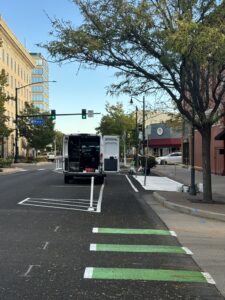
As citizens are aware, major changes to a town will bring with them a multitude of opinions and reactions. After sifting through social media posts, news stories and local commentary, it became apparent the City of Grand Junction’s Fourth and Fifth streets pilot project struck a few extra nerves that caused the debate to rise well above the normal level of local bantering. These recent changes to two of the main vehicle thoroughfares heading in and out of downtown Grand Junction seem to have already had ripple effects for travelers, commuters, businesses and business clientele in the area.
The Business Times spoke with employees, managers and owners at 20 different Main Street businesses in close proximity to Fourth and Fifth streets and asked them a series of questions and recorded their answers, with many answers not lacking in additional opinions or strong feelings about the changes.
Businesses were asked if they were made aware of the changes before they happened. Eight businesses answered yes and 12 answered no. As a follow-up to the yes answers, only two of the eight said the changes were what they expected.
When asked if their business had seen an increase or decrease in business and traffic since the beginning of the pilot program, eight answered it had definitely slowed, none answered it increased and 12 said it either hadn’t changed or they weren’t sure. The answers to this question also revealed how different types of businesses have seen different effects. Businesses that rely heavily on tourists and those that are destinations whose customers travel to their location for very specific products and services answered they were affected minimally. One restaurant said they hadn’t seen a drop or increase in business. Most shops and restaurants that rely heavily on local patrons said the decrease in business from locals was clear.
When asked if their business had employees who biked to work, 15 of the 20 said they had no employees biking to work; one said 15 to 20 out of 40 employees; yet another said they did during National Bike to Work Day, but not on a regular basis; one said an employee or two rarely, but not frequently, and two said they weren’t sure.
When asked if clients or customers had a mostly positive or mostly negative reaction to the changes one business said mostly positive, 15 said mostly negative, and four said the reaction was neutral.
Additional feedback from businesses and employees was on a spectrum that ranged from entertaining the idea of a downtown eventually with little to no auto traffic to putting the streets back to the same traffic patterns and set up before the pilot projects were implemented. Some commented the changes made them feel safer, while others deemed the changes made them feel less safe. Businesses that rely on an older client base appear to have been affected the most with some stating a portion of their customers would “no longer patronize downtown.” One business made reference to its client base being younger, more “blue” and very welcoming to the change.
Also noted was the general opinion that most bike traffic downtown runs east to west along Main Street and other parallel streets with little concern for the north-south routes of Fourth and Fifth streets, certainly not as far as North Avenue. Restaurants noted that most cyclists they see are not employees or casual diners, but rather cycling groups and other groups of recreational bikers who stop in for a meal or refreshment during one of their outings. A common concern for some cyclists and many vehicle users was passenger doors of parallel parked vehicles now opening into the bike lane.
A downtown frequenter who uses a handicapped scooter said he felt much safer with the changes. A cyclist who bikes to restaurants downtown indicated he felt much safer with the bike lane on the passenger side of the parallel parked cars instead of on the driver’s side next to traffic.
A customer told a shop operator that the reduction in traffic was the first time he had been able to park in front of his shop in years. Others noted that cars on Fourth and Fifth had slowed down since the changes and that it’s nice to have less parking meters.
A common concern of employees was the now closed entrances on Fourth and Fifth streets to the main parking lot behind store fronts on the south side of Main. They explained that entering and navigating the parking lot had become more difficult for larger vehicles.
Employees of four separate businesses indicated they were no longer using the parking lot. Many mentioned the difficulty delivery drivers were having using the alley between the businesses and the same parking lot for deliveries as delivery trucks must navigate tighter turns around parallel parked vehicles.
The most frequent comment overall was the pilot project created an atmosphere that felt tight and confusing for drivers, cyclists and pedestrians alike.

How have changes on Fourth and Fifth streets affected downtown Grand Junction businesses? added by The Business Times Staff on
View all posts by The Business Times Staff →