
As irrigation season ends early, graywater could offer another water source to keep trees and shrubs going
Brandon Leuallen, The Business Times
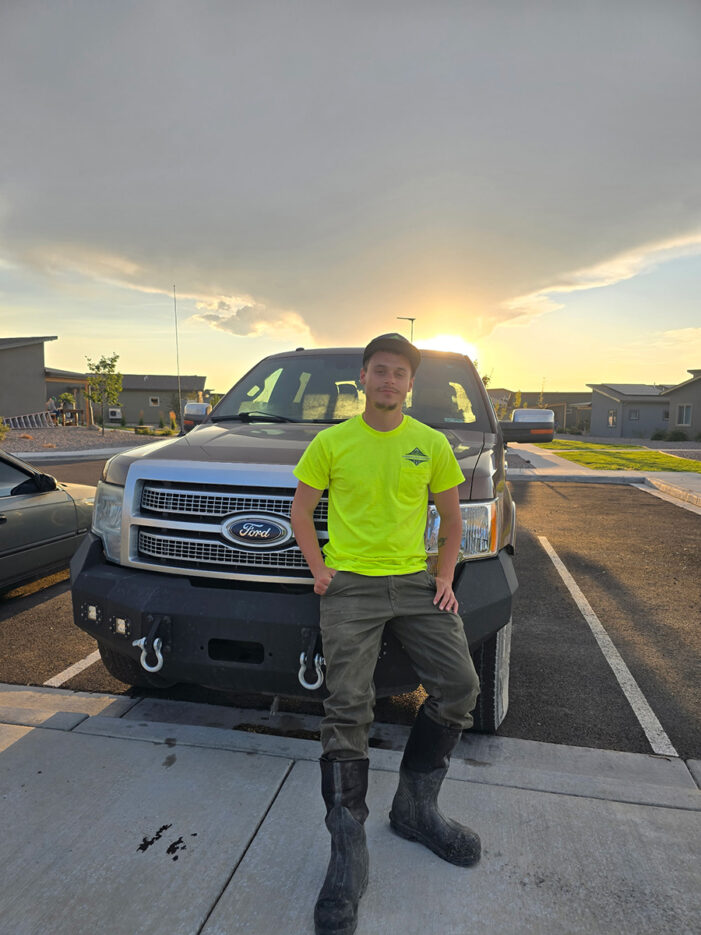
With irrigation water being shut off early in parts of the Grand Valley this year and uncertainty surrounding future water supplies, local landscaper Dalton Bentler believes reusing water that already passes through homes could become increasingly important.
Bentler, owner of Rocky Mountain Landscape, has been traveling outside the Grand Valley for specialized training in graywater systems, which reuse water from sources such as washing machines, showers and bathroom sinks rather than sending it directly to the sewer.
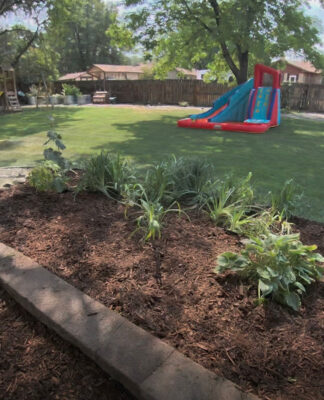
The Business Times recently examined how graywater, rainwater and stormwater harvesting are being used in other arid Western communities and their potential applications in the Grand Valley. This follow-up looks more closely at what is currently allowed in Grand Junction for graywater specifically, including the incentives available to residents.
He said the practice makes particular sense in a region where keeping landscapes alive can require substantial irrigation, while irrigation supplies themselves face intermittent shortages and early shutoffs.
“We need six winters – that’s what the water commissioner is saying – of consistent downpour of winter snow,” Bentler said. “That’s what we need to get back on track, and I don’t think that’s going to happen.”
Bentler believes those conditions could eventually push more residents and businesses to consider reusing graywater throughout the year, particularly if water shortages persist in future years.
The city legalized graywater reuse in 2022, offers financial incentives to help pay for systems and has held educational workshops.
City of Grand Junction Interim Utilities Director Ashley Firl said no one has yet pulled a permit for a formal graywater system, although residents may be reusing small amounts of household water through simpler methods that do not involve installed systems.
That may be partly because the infrastructure and workforce needed to make the practice accessible are still developing.
Bentler is one of a small number of local landscapers already trained and certified in graywater systems and is pursuing additional certifications that would allow him to install a wider range of systems for graywater landscape irrigation. Bentler said he is a certified installer listed on an EPA website serving the area from the Grand Valley to Telluride.
Bringing graywater expertise to the Western Slope
Bentler became interested in graywater while researching water-conservation programs that could help customers reduce the cost and water requirements of their landscaping. That research eventually led him to training in Denver.
“I’ve been trying to get the word out for graywater, because I’ve been going to Denver to get these classes,” Bentler said.
He said the city of Grand Junction recommended the classes to him. He has received training in laundry-to-landscape systems and is pursuing additional certification that would allow him to work with more complex graywater systems.
Bentler said one of the challenges is that relatively few people on the Western Slope are familiar with the practice.
He said a lot of people in Denver are starting to set up systems and he is going there Sept. 19 to help install a laundry-to-landscape system.
Firl identified the availability of trained installers as a challenge as well. Professional organizations are beginning to provide training and certifications for landscapers and irrigation companies, but the specialized systems are not something every contractor has experience installing.
For homeowners interested in graywater, that creates a basic problem: finding someone who knows how to install a legal system correctly.
Bentler hopes to help fill that gap.
Starting with the washing machine
One of the simpler approaches is a laundry-to-landscape system, which Bentler has trained to install.
He described a system in which a diverter valve allows water discharged from a washing machine to take one of two paths. When irrigation is needed, appropriate wash water can be directed outside through a gravity-fed irrigation system. When it isn’t needed, the valve sends the water to the sewer.
That does not mean permits allow residents to simply run a washing-machine hose onto their lawns.
Firl also said conventional sprinklers cannot be used to distribute graywater. It must instead be delivered below the surface or into appropriate mulch beds, and the system cannot allow graywater to pool where people or pets could come into contact with it.
The city also requires systems to be permitted before installation.
Firl said updated regulations reduced the required burial depth for some subsurface graywater irrigation from four inches to two inches.
The city has developed guidance for plants suited to local soils and subsurfaces on its Grand Valley all-star tree list.
Incentives and education
Grand Junction has tried to lower some of the barriers through rebates and education.
The city pursued Colorado Water Conservation Board grant funding to provide incentives for qualifying laundry-to-landscape components, graywater irrigation and treatment systems.
It has also held several in-person workshops since adopting its ordinance and developed guidance for homeowners and installers.
Firl said they have worked with the Denver Department of Public Health and Environment as Denver develops its own graywater program, including educational materials and installation guidance.
The city estimates a household of four could save about 20,000 gallons annually through graywater reuse.
Under normal Grand Junction water rates, reducing potable consumption by that amount could represent roughly $90 to $140 in reduced water charges, depending on which consumption tiers those gallons would otherwise fall into. Savings could be greater when drought pricing applies.
But the economics vary considerably, depending on the system.
Grand Junction estimates subsurface landscape-irrigation systems can cost approximately $200 to $2,000, while more complicated indoor systems can range from $2,500 to $20,000.
Firl said one barrier is retrofitting an existing home can add expense as compared to installing a system within the design on a new home.
Bentler sees an opportunity extending beyond individual homeowners.
Bentler said he is particularly interested in bringing graywater systems to high-water-use commercial properties, such as hotels and colleges, where large volumes of water could potentially be reused.

Interest, expertise growing in graywater added by The Business Times Staff on
View all posts by The Business Times Staff →