
Brandon Leuallen, The Business Times
Interim fire chief says department is working toward solution, but costs have outpaced projections, despite tax-measure funding
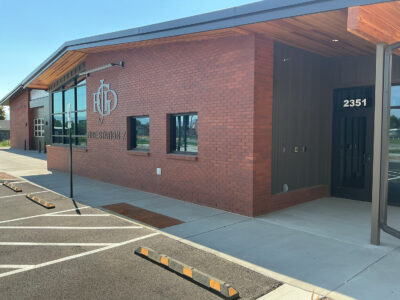
During the July 16 Grand Junction City Council meeting, local emergency medical technician Andrea Barber delivered a public comment warning that the newly built Grand Junction Fire Station 7, set to open across from Appleton Elementary, may be unstaffed despite voters approving a tax measure in 2019 that promised full staffing for new fire stations.
“There’s currently no solid plan in place to staff Station 7, nor to recruit for a fire academy next spring due to lack of funding,” Barber told the council. “This is a promise that was made to taxpayers, and it’s a promise I implore this council to find a way to keep.”
Station 7 is the third and final fire station funded by Ballot Measure 2B, also known as the First Responders Tax Act, which was approved by voters in April 2019. The measure increased sales and use taxes by 0.5 percent to provide “dedicated funding for fire, police, and emergency medical services.” The revenue from 2B was split between the Grand Junction fire and police departments, supporting not only firefighter staffing and infrastructure, but also police officers, civilian staff, dispatch operations, vehicles and equipment.
Language from the original ballot measure explicitly said funds would “equip and staff new fire stations” and hire and train public safety personnel. Council unanimously adopted a resolution in 2019 endorsing 2B, saying its passage is “vital to the health, safety, and welfare of the citizens of Grand Junction.”
“We built three stations. We staffed two of them,” Barber said. “While we should be proud of that, we would be remiss to stop short of the goal.”
Rising Costs and Delays
Interim Fire Chief Gus Hendricks, who has been with the Grand Junction Fire Department since 1999 and took over as interim chief in December 2024, acknowledged the concern and said the department is actively working on a solution.
“We recognize the commitment to the community and to keeping both our employees and the public safe,” he said. “It’s definitely a priority and a challenge.”
Hendricks added, “When we developed the projections in 2019, we estimated costs for both capital and personnel, but we’ve had some unprecedented increases, through COVID and other factors, that significantly raised the cost of construction and salaries.”
According to Hendricks, Station 7, which is modeled after previous station builds, ended up costing nearly $2 million more than expected.
“Just in our last two stations, we saw a $2 million increase for an identical build,” he said.
Originally scheduled for completion in 2022, Station 7 faced delays and is now under what’s called “substantial completion.” Hendricks said the department is working to obtain its certificate of occupancy by the end of July.
Staffing Shortfall and Budget Challenges
Though the building is nearly complete, the staffing needed to operate it remains unfunded.
“We do not currently have the personnel to open the station,” Hendricks said.
“We’ve looked at models to staff it with existing crews, but doing that would take away from the more active parts of the city.”
Fully staffing Station 7 will require hiring 21 new firefighters at an estimated cost of $1.6 million annually. A 20-week fire academy will be required to prepare them, with an additional one-time cost of approximately $535,000 for training, uniforms, protective equipment and supplies.
Hendricks said the academy serves the entire fire department, not just for expansion.
“We’ve held at least one academy every year since 2003, except for two years,” he said. “It’s not just for new stations; it’s how we maintain our staffing across all seven stations.”
Most recently the department graduated 13 recruits on July 3, but those hires were to replace retirements, not to expand for Station 7.
More than 60 percent of the city’s combined general fund and First Responder Tax revenue is already directed toward public safety, including fire, police, and emergency communications, according to Hendricks.
City Wide Budget is being developed
With sales tax revenues slightly down, the city is working through its budget process for the next fiscal year. City Council is in the process of updating its two-year strategic plan, which helps guide budget priorities.
Following a recent workshop, Grand Junction Mayor Cody Kennedy and other council members highlighted that the plan emphasized a focus on core services along with an emphasis on efficiency.
Interim Coverage and Long-Term Outlook
Until permanent staffing is secured, response to the Appleton area will continue to come from Stations 3 and 5, which are located on Patterson Road and in the Redlands, respectively.
“When Station 7 opens, it will relieve call volume currently being handled by two other stations,” Hendricks said. “But we have to balance that need with the rest of the city.”
The department is considering ways to temporarily assign existing personnel to the new station in a limited capacity, but Hendricks cautioned that pulling crews from busier areas could affect coverage citywide.
Hendricks acknowledged that finding new recruits is not an issue for staffing Fire Station 7. He said Grand Junction has taken steps to improve recruiting that have worked and broadened its applicant pool. Hendricks said one change that helped with recruiting is the department in 2020 removed the requirement for incoming recruits to already hold an EMT certification, instead providing that training during the academy.
“We’re hiring based on good morals, good ethics, good people,” Hendricks said. “We removed that barrier for those who want to serve but haven’t had the time or resources to get certified on their own.”
Wildland Fire Support Continues
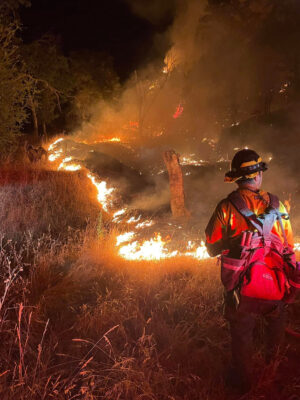
While the Grand Junction Fire Department navigates staffing and budget constraints locally, the department continues to support national wildfire response. The following is the full statement released by the Grand Junction Fire Department:
GJFD Wildland Deployment Update
“Just before the Turner Gulch Fire ignited, the Grand Junction Fire Department deployed a wildland team to California on a severity assignment in the Plumas National Forest. The crew, consisting of an Engine Boss, crew and a Type 3 engine, was tasked with providing initial attack capabilities for any new fire starts on U.S. Forest Service land.
“When the Turner Gulch Fire began, we began coordinating a crew swap to bring our personnel back home to support firefighting efforts here. After completing their 14-day deployment, our team returned yesterday. Our Type 6 engine remains in California and will be restaffed by a new crew, a practice that avoids unnecessary equipment transport while maintaining operational readiness.
“At this time, all local wildland assignments related to the Turner Gulch Fire are fully staffed. Meanwhile, fire conditions in California remain severe, and a new GJFD crew will soon redeploy to continue supporting suppression efforts in Plumas National Forest. The Grand Junction Fire Department is reimbursed for personnel and equipment costs when we deploy.
“We are also actively managing our local wildland response capacity. Limited availability of Engine Boss-qualified personnel, including two currently out due to injury, means careful coordination is essential to meet both local and national demands.
“We’re proud to serve not just our community, but the broader region. Just as other departments have answered the call to help here in Mesa County, we remain committed to supporting wildfire operations across the country when needed.”

New GJ fire station may open without staff added by The Business Times Staff on
View all posts by The Business Times Staff →