
Every so often a state makes a bet big enough to change what its economy is for. Colorado has made one, and most people on the Western Slope haven’t been asked whether it includes them.
The bet is quantum. Colorado now has one of the country’s leading quantum-technology clusters, with roughly 3,000 workers across more than thirty companies, anchored by a federal Tech Hub designation and a research base at CU Boulder, Colorado State University and the Colorado School of Mines. This past February, the state signed an agreement with Taiwan, the center of the world’s semiconductor manufacturing, to deepen work on quantum, photonics, semiconductors and, notably for us, precision agriculture.
These decisions matter because investment and talent tend to follow the places that are ready for them.
The natural reaction here is that this is a Front Range story. Boulder labs, Denver capital, a world that starts east of the Divide and doesn’t much concern a valley that runs on agriculture, energy and small business. That reaction is understandable. It is also worth questioning, because the people building this industry keep saying the opportunity is broader than that.
The pitch attached to Colorado’s quantum push is that it isn’t only a physicist’s game. Elevate Quantum, the consortium leading the effort, reports that the average quantum job pays more than $125,000 a year and projects that close to half of the roles will not require an advanced degree. Technician positions are expected to double as a share of the workforce over five years.
The Colorado School of Mines has now launched the nation’s first bachelor’s degree in quantum-systems engineering, built in part because most quantum training has historically aimed at master’s and doctoral students while the industry increasingly needs people with a broader range of technical skills.
The industry’s bottleneck isn’t ideas. It’s people. By Elevate Quantum’s own count, there are roughly three open quantum jobs for every qualified worker.
That shortage is either a Front Range problem or a Western Slope opportunity, and physics doesn’t decide which. We do.
Precision agriculture sat right there in the Taiwan agreement, next to semiconductors and photonics, which is why we should pay attention.
Precision agriculture means sensors in fields, data from center pivots, smarter irrigation, better soil information, and technology that helps producers get more from limited water and inputs. That is where the state’s advanced-technology strategy intersects directly with an industry the Western Slope already understands.
If there is a natural on-ramp from this region into the advanced-tech economy, agriculture is one of them. And on that subject, we are not spectators. We have the producers, the land, the water challenges and the practical knowledge that technology companies need if they want their products to work outside a laboratory.
The opening may not be in quantum computing itself. It may be in machining, electronics, optics, sensor technology, advanced manufacturing or the agricultural applications built on top of them. Those are capabilities a rural region can actually develop.
But an on-ramp is a thing someone has to build. A federal designation doesn’t train a technician in Delta. An agreement with Taiwan doesn’t connect a Montrose grower to a photonics firm. Those create the possibility of participation. Turning possibility into a paycheck is local work.
It looks like a community college standing up the right credential. An employer willing to take a chance on a first cohort. A manufacturer developing the capacity to supply a new industry. An advisor connecting a rural business to a program it didn’t know existed. That work happens here, or it doesn’t get done.
And if it doesn’t, no single decision will mark the moment we missed it. Years from now it will simply look like one more opportunity that accumulated where the capacity already existed and passed the rest by.
Regions don’t fall behind in a single decision. They fall behind in the accumulated gap between the places that got ready and the places that waited to be asked.
None of this means abandoning what already works. Agriculture, energy, outdoor recreation and small business are the backbone here and will stay that way. The point is narrower.
When a state makes a generational bet, rural communities still have a choice: Build the workforce, partnerships and infrastructure that connect them to it, or assume the opportunity belongs somewhere else.
Colorado is building something real, and the question for the Western Slope is whether we intend to make the connections that give our businesses, workers and communities a place in it.
No one else is going to build that on-ramp for us.
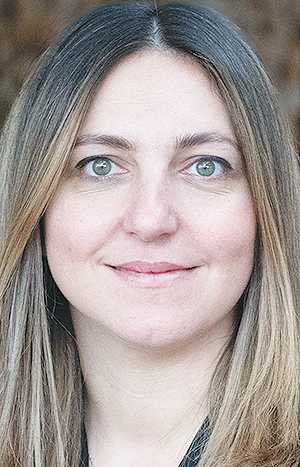
Dalida Sassoon Bollig is chief executive officer of the Business Incubator Center, 2591 Legacy Way, Grand Junction.

Quantum on the Western Slope: The on-ramp someone has to build added by Dalida Bollig on
View all posts by Dalida Bollig →