
Born out of Mesa County’s boom-and-bust economy, the Business Incubator Center helps local entrepreneurs build businesses, support families and create lasting jobs
The Business Incubator Center grew out of a community searching for a more stable economic future after years of boom-and-bust cycles tied to uranium, coal and oil shale.
The 1982 oil shale collapse, known as Black Sunday, became a breaking point. Forty years later, about 35 percent of businesses operating in Mesa County have received assistance from the incubator, according to Business Incubator Center CEO Dalida Sassoon Bollig.
Barbara Creasman, who worked in policy and research for Mesa County and helped write an early grant supporting the effort, recalled that those cycles had shaped the region long before the oil-shale bust.
Some residents accepted the swings as part of life here. Others looked toward the next boom as an opportunity. But a larger question remained: How could people earn a steady living, put down roots and thrive through the region’s economic ups and downs?
The incubator began as a loan fund and expanded to help people already living in Mesa County build successful businesses, create jobs and earn a living here. Forty years after its founding, the center continues that work through business guidance, financing, workspace and other resources to help companies start, stabilize and grow.
And its marking that history on its 40th anniversary day, Oct. 16, by hosting Entrepreneur Exchange 2026 (EN/EX 26) from 11 a.m. to 1 p.m. at the Grand Junction Convention Center.
For Kathy Hall, the center’s board president and a former Mesa County commissioner, its beginnings reflect a community willing to work through its own problems.
“One of the reasons that I absolutely am so devoted to this community and love this community so much is because when we have difficulties, or we have a problem where we need to fix our community, we go to work and do it,” Hall said.
Establishing those services required more than a shared desire to improve the economy. Early supporters worked through questions about the government’s role, the risks of lending to small businesses and which industries should receive assistance.
Responding to the bust
Creasman remembered returning from a family vacation when Exxon announced its withdrawal from the oil-shale project. Her husband worked in construction, and uncertainty quickly affected work in the community.
The consequences extended beyond companies directly involved in energy development. Local businesses depended on residents having money to spend, and the downturn affected the broader economy.
Creasman recalled downtown occupancy remained about 60 percent when she began working at the Downtown Development Authority in 1988.
Her work for Mesa County included examining why county government should become involved in particular initiatives and how those efforts could address local needs.
Sassoon Bollig described an informal “kitchen table group” that came together in 1985. Business owners and representatives of local governments visited companies, reviewed financial information and projections, and helped owners work through the challenges they faced.
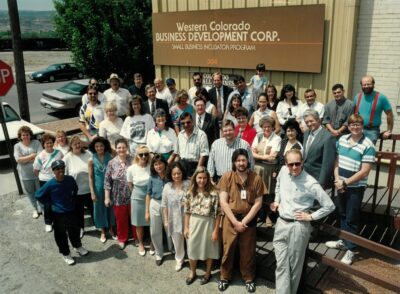
The work was initially done by volunteers. Those efforts developed into the Western Colorado Business Development Corporation, the nonprofit established in 1986 and known today as the Business Incubator Center.
Early board members did more than attend meetings. They helped guide the organization while providing hands-on assistance to businesses.
Helping businesses already here
Creasman emphasized the importance of building an organization around the needs of the existing community.
While other economic development organizations pursued business recruitment from outside the area, the incubator’s focus was on helping local residents and companies become more successful.
Those residents had already chosen to live in Mesa County. Supporting their businesses could help them earn a living, employ others and remain here.
That purpose also shaped the incubator’s broad approach. Rather than specialize in technology, food production or another industry, it needed to serve the variety of businesses already operating in Mesa County.
“You gotta look at what you need,” Creasman said.
Someone helping businesses across industries could not rely solely on expertise in a particular product or trade. The organization needed to connect owners with knowledge and resources appropriate to their circumstances.
An entrepreneur might understand how to make a product or provide a service but need help with financial management, marketing or expansion.
“Nobody’s an expert in everything,” Creasman said.
Financing and business assistance
The revolving loan fund began shortly before the incubator, providing financing for local businesses.
Money repaid by borrowers could then be loaned to other businesses, allowing the resources to continue circulating.
But evaluating loans also revealed needs that money alone could not resolve. Officials had to consider whether an owner had the skills and information needed to carry out a plan successfully.
Providing business assistance alongside financing became a natural progression, improving a company’s chances of succeeding while strengthening the prospects that its loan would be repaid.
Many early borrowers were already operating businesses. They might need equipment, want to expand or be trying to resolve problems affecting their performance.
Creasman helped write the early grant that supported the effort. Center leaders described $75,000 in initial grant funding, although the grant’s date and specific purpose remain to be confirmed.
Working through resistance
Creasman recalled some resistance to the early efforts, including concerns about accepting grant funding and the obligations attached to it. County commissioners had to approve the work. Part of her job was explaining the proposal and addressing questions from officials who were unfamiliar with the concept.
The loan fund provided a more concrete starting point than the broader question of how an incubator would help many different kinds of businesses.
Creasman also recalled reluctance to assist retail businesses. At the time, economic development discussions emphasized manufacturing and primary jobs.
She believed locally owned retailers mattered to Grand Junction’s role as a regional shopping and service destination. People traveling to the community for medical care, shopping or other needs could spend money at local businesses. Especially with the city of Grand Junction’s primary income being sales-tax revenue.
Mesa County’s involvement also allowed the work to reach beyond Grand Junction to Fruita, Palisade and unincorporated areas, she recalled.
A place to grow
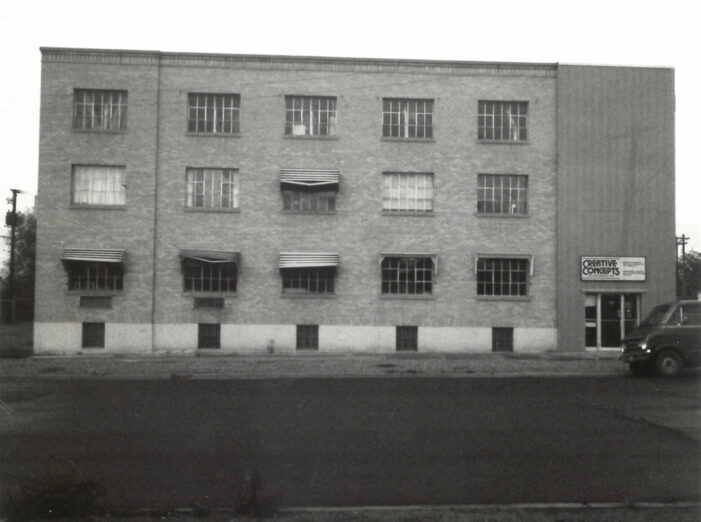
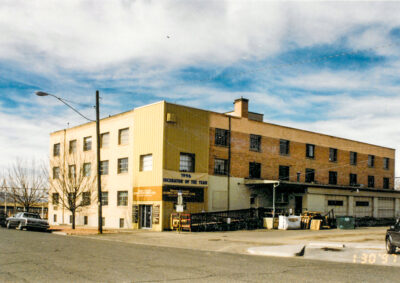 Local businessman George Wheeler helped establish the incubator and the Western Colorado Community Foundation. He provided the incubator’s first space in his downtown warehouse at a reduced lease rate of $1 per square foot.
Having a building allowed the organization to combine business assistance with space where entrepreneurs could operate.
Hall helped seek startup funding while working for U.S. Sen. William Armstrong. Later, as a commissioner, she supported funding and helped establish the Rural Technology Corporation to manage former Department of Energy property, where the incubator relocated.
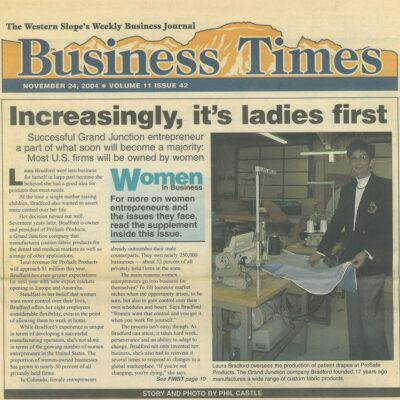
Creasman recalled Laura Bradford’s ProSafe Linen as one of the incubator’s first tenants. According to the Business Incubator Center, other businesses that it assisted over the years include Loki, a Grand Junction outdoor apparel company known for clothing with built-in mittens and face coverings. Founded locally by brothers Dirk and Seth Anderson, Loki expanded into international markets, beginning with Japan in 1999.
Palisade-based Pear Blossom Farms began using the incubator’s food-production facilities in 1994, receiving help with equipment and manufacturing regulations before establishing its own facility. Its sauces, syrups, preserves and other specialty foods reach customers nationwide.
The center’s reach also includes familiar local destinations. Trail Life Brewing received financing through the incubator’s Business Loan Fund to help establish its downtown brewery. Ristorante Pantuso’s owners used business classes and coaching to strengthen operations, improve bookkeeping and develop a food truck.
Fruita’s Imondi Wake Zone turned to the loan fund after its owners were denied financing by 17 banks. They also took the incubator’s Bookkeeping Boot Camp as they worked to establish their water-recreation business.
Other examples include Pronto Bronto, which used the commercial kitchen for food preparation and storage, and 579 Construction, which received startup financing, business-planning assistance, and office and storage space on campus.
The American Dream and families
For Sassoon Bollig, the incubator’s work is ultimately about helping people pursue the American Dream: building businesses that allow them to support their families, create jobs and build a future in their community.
Entrepreneurs carry the risks and responsibilities of that work. The incubator provides guidance and resources to help them make sound decisions and grow sustainably.
“They’re the ones taking the risks,” Sassoon Bollig said.
Helping those companies grow and sell products beyond the local market brings money into the community and creates opportunities beyond the individual owner.
Building the next 40 Years
Part of the center’s work is making sure owners understand that assistance is available to them. Although “Business Incubator Center” is more recognizable than its legal name, Western Colorado Business Development Corporation, “incubator” can suggest services only for startups. The organization also helps established businesses address financial challenges, purchase equipment, expand and plan their next stage of growth.
Sassoon Bollig said workforce availability and access to capital are among the biggest challenges businesses face today. Although people are moving to the area, she said the community needs more residents of working age, making the retention of entrepreneurs, businesses and jobs particularly important.
Businesses have also navigated disruptions from the pandemic and changes in government administrations. At the same time, she sees renewed interest in local production and manufacturing. The incubator helps owners connect with technology, financing, coaching and other resources to pursue those opportunities.
Capital is harder to obtain, and rural communities can feel those constraints first, Sassoon Bollig said. Despite the center’s loan fund and relationships with banks and investors, she said more financing is needed.
Individual companies also need supporting businesses and resources around them. One of the incubator’s goals now is to move beyond filling isolated gaps toward helping build stronger industries with greater capacity.
Looking ahead, Sassoon Bollig wants to extend that work into surrounding communities through partnerships and collaboration, allowing growth in one part of the region to help strengthen neighboring areas.
Asked what it means to see local business owners overcome challenges and succeed, Hall became emotional as she described why the work matters to her.
She said the community’s natural beauty cannot make up for being unable to support a family.
“The important thing, in a really good life, is being able to have an economy to feed your family,” Hall said.
Marking 40 Years of Business Assistance
The Business Incubator Center is hosting a special celebration Oct. 16 to honor the people who have helped shape the Western Slope over the past 40 years. The event is called Entrepreneur Exchange 2026 (EN/EX 26), and it will take place from 11 a.m. to 1 p.m. at the Grand Junction Convention Center in downtown Grand Junction.
EN/EX26 brings together entrepreneurs, business leaders, innovators and civic partners for a luncheon and awards program to celebrate and recognize the outstanding entrepreneurs and community leaders that shape the future of the Western Slope.
Entrepreneurial Awards will be presented for: visionary leadership; innovation; community impact and legacy recognitions; and outstanding entrepreneurs. The event also will feature a keynote speaker focused on entrepreneurship and economic resilience and a BIC 40 Years of Impact presentation.

BIC marks 40 years of growing the American Dream added by The Business Times Staff on
View all posts by The Business Times Staff →