
City budget strained by Dos Rios debt, regional fire agreement, unfunded mandates, rising labor costs
Brandon Leuallen, The Business Times
The City of Grand Junction is facing a $6 million structural deficit heading into its 2027 budget process as expenses continue to outpace recurring revenues.
Among the biggest challenges to a balanced budget are a roughly $1.03 million Dos Rios debt-service payment, a rural fire-service agreement that costs the city at least $2 million more annually than it receives, rising labor costs and unfunded state mandates.
City Manager Mike Bennett and Chief Financial Officer Jay Valentine outlined the city’s financial position during an Aug. 31 City Council workshop as staff had begun developing a proposed 2027 budget. A number of the financial commitments and pressures they are now addressing began before either assumed their current positions, while others reflect broader challenges facing municipalities across the country.
“Currently the 2027 balancing gap is $6 million,” Valentine said. “So, if we didn’t add any new staff or any of the one-time requests, this is status quo. We need to tackle the $6 million deficit.”
The gap exists before approximately $7 million in one-time requests and $7.9 million in additional position and salary requests, including $5.5 million for public safety, are included. Combined with the existing gap, the additional requests bring the total amount under consideration to approximately $20.9 million, although many of the new requests can be deferred or rejected.
The city’s presentation shows an imbalance developing over several years. From 2021 through 2026, ongoing revenues increased about 30 percent, while ongoing expenses increased 53 percent.
The city’s recurring operating margin declined from an $11.3 million surplus in 2021 to $8.3 million in 2022, $6 million in 2023 and $3.6 million in 2024. It moved to a $600,000 deficit in 2025, followed by a $3 million deficit in the 2026 adopted budget and a projected $6 million gap in 2027.
Bennett and Valentine emphasized the problem is not the result of a single decision or budget year. Bennett also declined to use hindsight to disparage decisions made by previous administrations and councils.
“We have the luxury of hindsight and we have the luxury of trends, and we’re using those to look forward at how do we fix this structural deficit,” Bennett said.
Dos Rios development leaves debt obligation
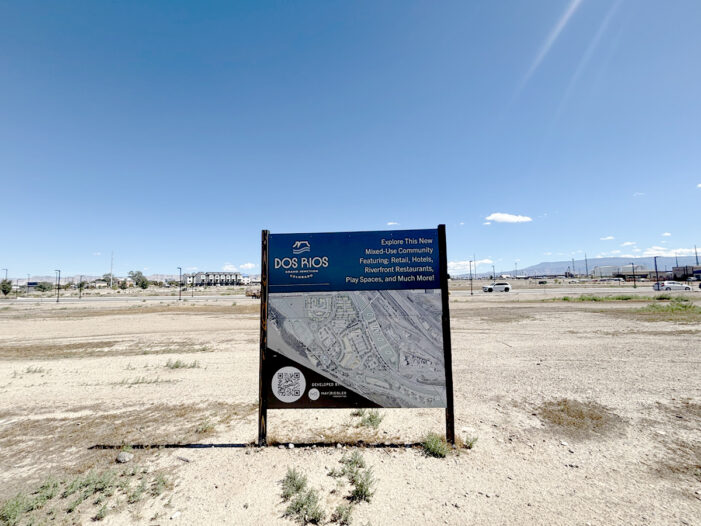
One of the clearest examples of an earlier financial commitment affecting the 2027 budget is the Dos Rios development along the Colorado River.
TABOR generally requires voter approval before Colorado municipalities take on multi-year debt. Under former City Manager Greg Caton, rather than asking Grand Junction voters citywide to approve debt for the Dos Rios project, the city financed infrastructure for the speculative development through a structure involving the Dos Rios General Improvement District and Downtown Development Authority, with repayment expected to come largely from tax revenues generated as the property developed.
Portions of Dos Rios have since been developed, including part of the Crawford Row townhomes, Starbucks and the Confluence Center, but the broader mixed-use project has developed more slowly than anticipated. Construction on the second phase of Crawford Row resumed this year after a delay.
The city’s 2027 budget presentation says, “Dos Rios GID development stalled.” The city remains responsible for the debt and expects to pay approximately $1.03 million in Dos Rios debt service in 2027.
Valentine said the debt had been modeled around future economic activity at the development.
Later in the workshop, Bennett said the city may need to revisit existing agreements as it looks for ways to address the structural deficit, specifically pointing to economic development efforts and agreements along the riverfront.
Federal relief ends as ongoing costs remain
The expiration of federal pandemic-relief funding is another challenge facing municipalities.
The city’s presentation describes an “ARPA cliff” and the current national fiscal environment as “post-relief budgeting.” Federal American Rescue Plan Act money temporarily provided local governments with additional resources, but one-time funding cannot permanently support services and expenses that continue after the money disappears.
That problem extends beyond Grand Junction. The city characterized the expiration of pandemic assistance as part of a broader squeeze facing state and local governments as revenue growth slows and federal relief ends.
Previous budget fixes deferred expenses
Bennett and Valentine also described previous budget-balancing methods that did not permanently address the difference between recurring revenues and expenses. Those included delaying vehicle replacements and preventative facility maintenance, shifting eligible expenses to enterprise funds and using accumulated balances in internal funds.
Valentine described those options as “one-time levers.”
“It shields you from reality, for lack of a better word, for that one year, but it hits you the next year,” he said.
The city’s vehicle fleet now averages 14.2 years old compared with a target of approximately 7.5 to eight years.
“We make it work. And we make it work. And then we make it work,” Bennett said. “And all that continues to compound into where we’re at today.”
Wages rise as city competes for workers
Personnel expenses represent the largest source of increasing recurring costs, but officials said controlling them must be balanced against the city’s ability to recruit and retain employees.
Turnover is running near 12 percent, while vacancies take approximately 102 days to fill. The city has made market adjustments and compensation changes to remain competitive with other municipalities.
The hourly police officer rate increased 63 percent, from $33.78 in 2021 to $54.99 in 2026. Police corporal rates increased 59 percent and police sergeant rates 58 percent. Fire engineer rates increased 71 percent, firefighter rates 44 percent and fire captain rates 33 percent.
The city said those adjustments addressed recruitment, retention and market-competitiveness problems, but also permanently increased its recurring wage base.
Compensation is projected to increase approximately $7.3 million, or 9.5 percent, including a $1.3 million placeholder associated with the city’s compensation study.
Cost of living adds another challenge. Mesa County remains more affordable than many areas of Colorado, but Grand Junction competes for employees within a state where housing and other living expenses are high compared with much of the country.
Health insurance is also increasing personnel costs. The city’s self-funded insurance program is projected to cost about 25 percent more than budgeted in 2026, with monthly costs of approximately $2,528 per employee compared with the $2,028 budgeted.
About $1.2 million is needed to bring the Insurance Fund back to roughly zero. However, officials estimate self-funding avoided approximately $5.8 million in costs from 2024 through 2026 compared with remaining fully insured.
Public safety outgrows dedicated funding
The First Responder Fund faces an underlying gap of approximately $3.6 million, with the General Fund expected to transfer about $1.3 million to it in 2027.
Demand has also increased as 911 calls up 22.9 percent since 2021.
The city receives approximately $3.3 million annually to provide fire service outside city limits, but it estimates the service costs at least $2 million more than it receives.
Staff plans to provide the required two-year notice to renegotiate the agreement. Bennett emphasized the city does not want to stop providing the service, but it wants an arrangement that does not require Grand Junction residents to subsidize service outside city limits.
Council member Anna Stout said the city should seriously examine whether a fire district could provide a more sustainable way to fund fire and emergency medical services regionally.
Unfunded mandates add workload
Stout also pointed to unfunded mandates and what she described as reactionary legislation as another source of pressure.
The city’s presentation lists “Mandates add work without funding” among six pressures identified across departments, citing approximately 40 law-enforcement bills along with state housing laws, records and body-camera workload and water regulations.
Complying with those requirements can require additional staff time and resources without providing corresponding revenue.
Revenue growth remains limited
Grand Junction’s 2 percent sales and use tax generates approximately $56 million and remains the primary source of funding for general operations.
The city’s 8-mill property-tax levy has remained unchanged for more than 30 years. Property-tax revenue increased from $8.6 million in 2021 to $12.5 million in 2026 but is projected to remain at approximately $12.5 million in 2027.
Overall, ongoing revenue is projected to increase only $1.9 million, or 1.6 percent, in 2027. Voter-approved revenues dedicated to first responders, capital projects, the Community Recreation Center and parks are restricted and cannot be redirected to general operations.
The city also ended 2025 with approximately $48.5 million in its General Fund balance, but Valentine cautioned that fund balance is not recurring revenue. Reserves can provide time to address the problem, but repeatedly using them to cover a $6 million annual gap would not resolve the structural imbalance.
City searches for solution
City departments have identified more than $1 million in efficiencies, including radio savings, route redesign and artificial-intelligence pilot programs, but the presentation says those savings are “not enough to close a (approximately) $6M operating deficit.”
Staff is reviewing department budgets and individual line items before developing recommendations for the city council. Those could include spending reductions, restructuring services, reconsidering existing agreements, limited use of one-time resources and additional recurring revenue.
No package of cuts, tax increases or other solutions was adopted during the Aug. 31 workshop.
Bennett said restoring structural balance could require rejecting worthwhile proposals.
“Sometimes in times like this, it’s where we have to say no to some good ideas to make sure we get everything structurally sound to be able to continue to provide the services at a high level,” he said.
Staff is expected to present a proposed 2027 budget to City Council in October, with review and adoption continuing through November and December.

Grand Junction faces $6 million structural deficit added by The Business Times Staff on
View all posts by The Business Times Staff →