

Brandon Leuallen, The Business Times
A Mesa County judge denied the county’s request to stop a Glade Park event venue from operating while its lawsuit against the owners continues.
The judge found that the county sought to impose a separate site-plan-approval requirement found neither in its land-development code nor among the conditions commissioners placed on the venue.
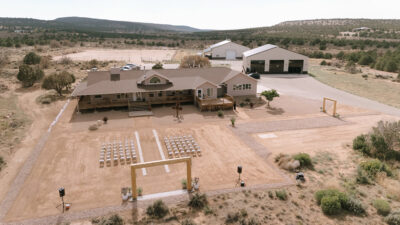
In an Oct. 20 order, District Judge Brian J. Flynn, who is scheduled to retire Dec. 31, denied the county’s motion for a temporary restraining order and preliminary injunction. The decision leaves Mesa View Venue at Little Park Ranch operating under the conditional-use permit that commissioners approved in May 2025 and the certificate of occupancy the county issued in May 2026 while the lawsuit proceeds.
The dispute began as Cheryl and Scott Norton and Charles Hoge sought approval to use the property for weddings and other events. Planning staff recommended approval with conditions, while the planning commission recommended denial on a 4-0 vote. Neighbors raised concerns that included traffic, noise and the effect of events on the rural area.
According to Flynn’s order, the Planning Commission hearing was disrupted several times, including by people shouting profanities.
After the owners reduced the proposed maximum from 125 events a year to 42, the Mesa County Commission unanimously approved the venue May 27, 2025, as a minor-entertainment-events use. Their resolution required events to end by 10 p.m. and set conditions on noise, parking dust, lighting, bathrooms and sight distance along the road. It did not require another site-plan review.
According to Flynn’s order, County Attorney Todd Starr sent the owners a letter Dec. 15, 2025, stating their permit remained pending without separate site-plan approval. Cheryl Norton responded that the commissioners’ resolution contained eight conditions, none requiring that approval.
Nine days later, the county issued a cease-and-desist notice alleging the owners lacked a certificate of occupancy for commercial events.
Norton said they then pursued occupancy approval but did not seek a separate site-plan review.
The Nortons met Starr and other county officials Dec. 29, 2025. According to Flynn’s order, Starr acknowledged during the recorded meeting that he had “screwed up” by leaving a site-plan-approval condition out of the resolution presented to commissioners. When the Nortons declined to seek another approval, Starr expressed a desire to “shut down” the venue, the judge wrote.
Cheryl Norton said Starr gave them until 8 a.m. the following morning to sign an agreement addressing a planned New Year’s Eve event and steps toward occupancy approval, with the threat of an injunction if they did not. That left them overnight to consider a legal document or seek an attorney’s review, she said. The agreement also contained language about site-plan approval, which the owners disputed.
The county later relied on that agreement to place a hold on the occupancy process, according to the ruling. On page 6, Flynn wrote that the county admitted the agreement was unenforceable because Charles Hoge, a 50 percent owner, had not signed it. On page 11, he wrote that the county initially argued the agreement required site-plan approval but withdrew that argument in court.
The owners made improvements to the property, including work on its septic system and an accessible bathroom. The county issued a certificate of occupancy May 13, 2026. On June 11, Starr filed the lawsuit and asked the court to order the owners to cancel events and stop operating while the case proceeded. By then, the owners had resolved the occupancy issue that prompted the cease-and-desist notice.
Flynn denied the county’s request for an immediate order without a hearing on June 15. His Oct. 20 ruling followed hearings held Oct. 12 and 14.
Flynn found that the site plan submitted with the conditional-use application was approved as part of that application. He also found that the county issued a building permit and certificate of occupancy without requiring a separate site-plan approval.
Referring to the Board of County Commissioners as the BOCC, Flynn wrote, “It would disserve the public interest to allow the BOCC to impose, via litigation, requirements that do not exist in its code or in the BOCC’s Resolution approving Defendants’ conditional use permit for the Property.”
The judge also questioned the decision to pursue the case after the county issued the certificate of occupancy. He wrote that Starr “inexplicably filed this action” on June 11, seeking a court ruling on the site-plan requirement and an order to stop the venue’s operations.
Flynn found that the county had not met the requirements for a preliminary injunction, including showing immediate harm from the venue’s continued operation. Closing it while the case proceeded would cause substantial financial harm to the owners, he wrote. In an interview with The Business Times, Norton said the dispute has cost the owners about $50,000 in legal expenses, paid in part with retirement funds.
Norton said her attorneys planned to subpoena Starr for the injunction hearing, but were unable to serve him before it took place. Starr had resigned as county attorney in a letter dated Sept. 29. In a Sept. 30 announcement naming Stephanie Rubinstein acting county attorney, commissioners said, “We thank Todd for his service to Mesa County and wish him well.” The announcement did not link his resignation to the venue case.
Flynn also denied the owners’ request for attorney fees and costs without prejudice, noting the hearings addressed the county’s request for immediate relief rather than a full trial on the lawsuit’s merits.

Judge rejects county bid to halt Glade Park event venue added by The Business Times Staff on
View all posts by The Business Times Staff →
One Response to "Judge rejects county bid to halt Glade Park event venue"