
Brandon Leuallen, The Business Times
If it seems like there are more ladybugs around this spring, local entomologists say that observation is on target.
With a mild winter and an early abundance of food sources, lady beetle populations appear to be higher than usual across the Western Slope.
“With our really mild winter that we’ve had this last year, the lack of cold temperatures, there’s many insects that have overwintered more successfully,” said Melissa Schreiner, an entomologist with the Colorado State University Extension in the Tri-River Area. “Lady beetles are absolutely something I have been observing more of this year.”
Schreiner said she has observed higher numbers during early-spring insect surveys in desert ecosystems around Grand Junction and across the area.
The boost in beetle populations is tied not only to survival through the winter, but also an increase in available prey.
“There are lots of aphids that have overwintered, which is likely because there are a lot of food sources around,” Schreiner said.
More than just red with black spots
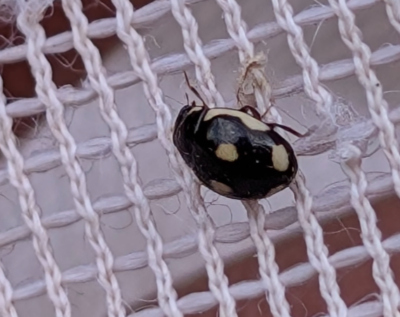
While the classic red beetle with black spots is the most recognizable, Schreiner said there is far more diversity than many people realize.
“Lady beetles, or ladybugs, they’re true beetles, and we have thousands of described species,” she said. “They vary from really small sizes, like a pinhead, to maybe like a coffee bean in size, and they’re all different colors, and they can have various patterns.”
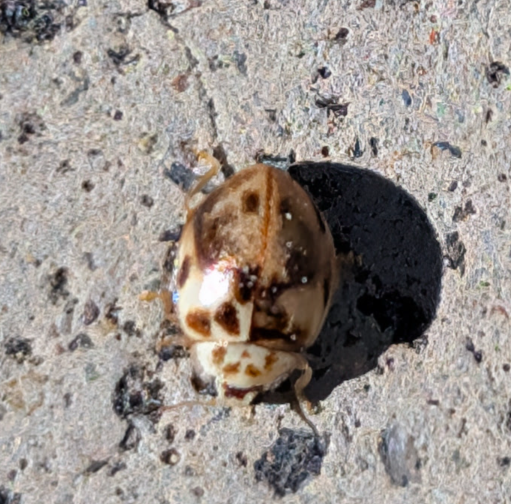
Some species are black with cream markings, others are solid red, orange or even brown with mottled patterns. Many are so small or differently colored that they go unnoticed as lady beetles.
Despite their variety, most share the same role as predators in the ecosystem.
“They mostly just eat other soft-bodied insects,” Schreiner said. “They’re famous for eating aphids.”
Lady beetles often lay their eggs near aphid populations, ensuring their larvae have an immediate food source after hatching.
A beneficial insect with few downsides
Schreiner said the vast majority of lady beetles found in Colorado are native and beneficial, helping naturally control pest populations without the need for chemical treatments.
“There’s very few of them that cause problems,” she said.
One exception is the multicolored Asian lady beetle, a nonnative species that can sometimes become a nuisance when it gathers indoors in search of stable temperatures and occasionally bites people.
“It’s kind of like the Goldilocks insect. It likes to be inside and have the perfect temperature,” Schreiner said. “They can congregate there.”
She also noted one rare species that can be found in Colorado, the Mexican bean beetle, eats dry beans.
“That’s really the only one that eats plants, Almost every single other lady beetle, thousands of them, eat other insects. So they’re well-known predators,” Schreiner said.
Even so, she noted that most encounters with lady beetles, whether indoors or outdoors, are harmless.
Overall, the increase this year reflects a favorable balance of weather and food availability.
“They have better years than others,” Schreiner said. “This is a good one for them.”

Lady beetles of many kinds in abundance after mild winter added by The Business Times Staff on
View all posts by The Business Times Staff →